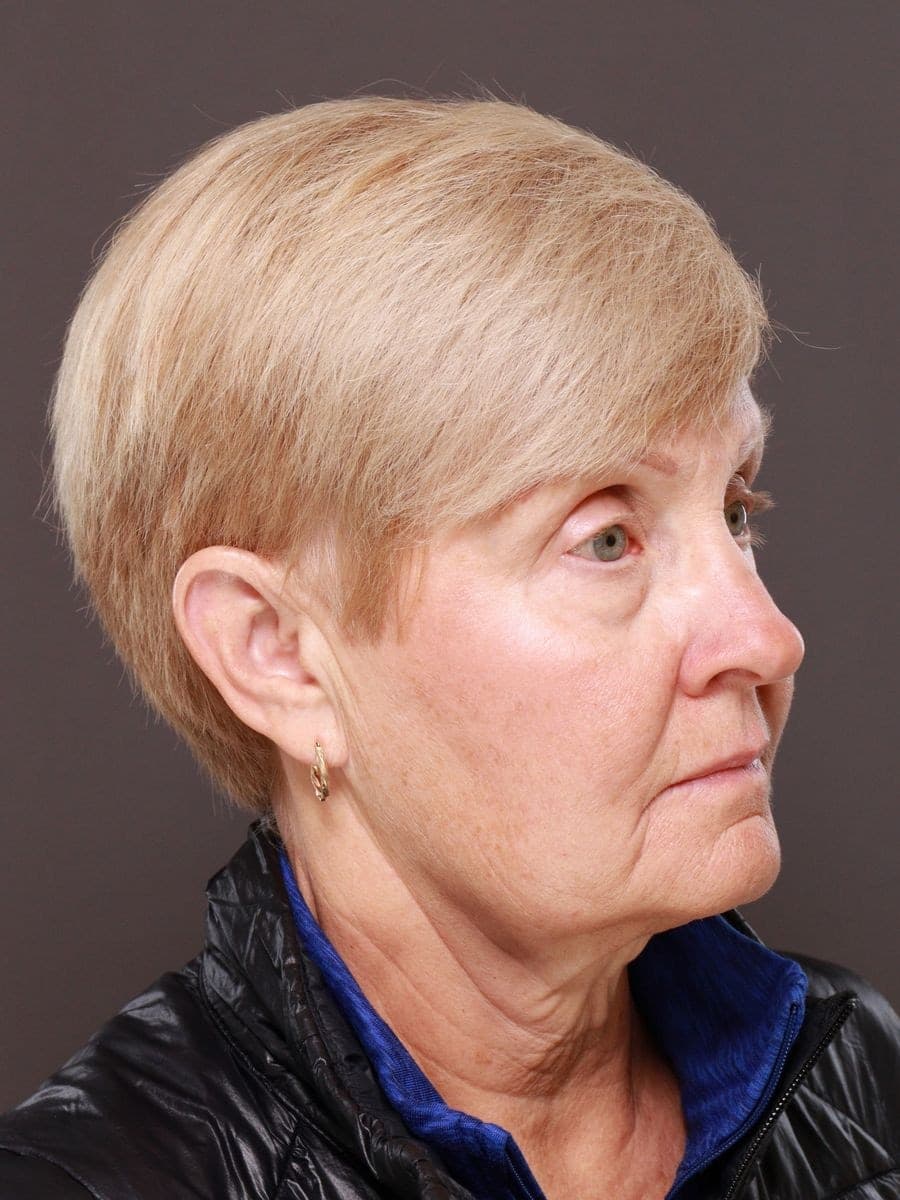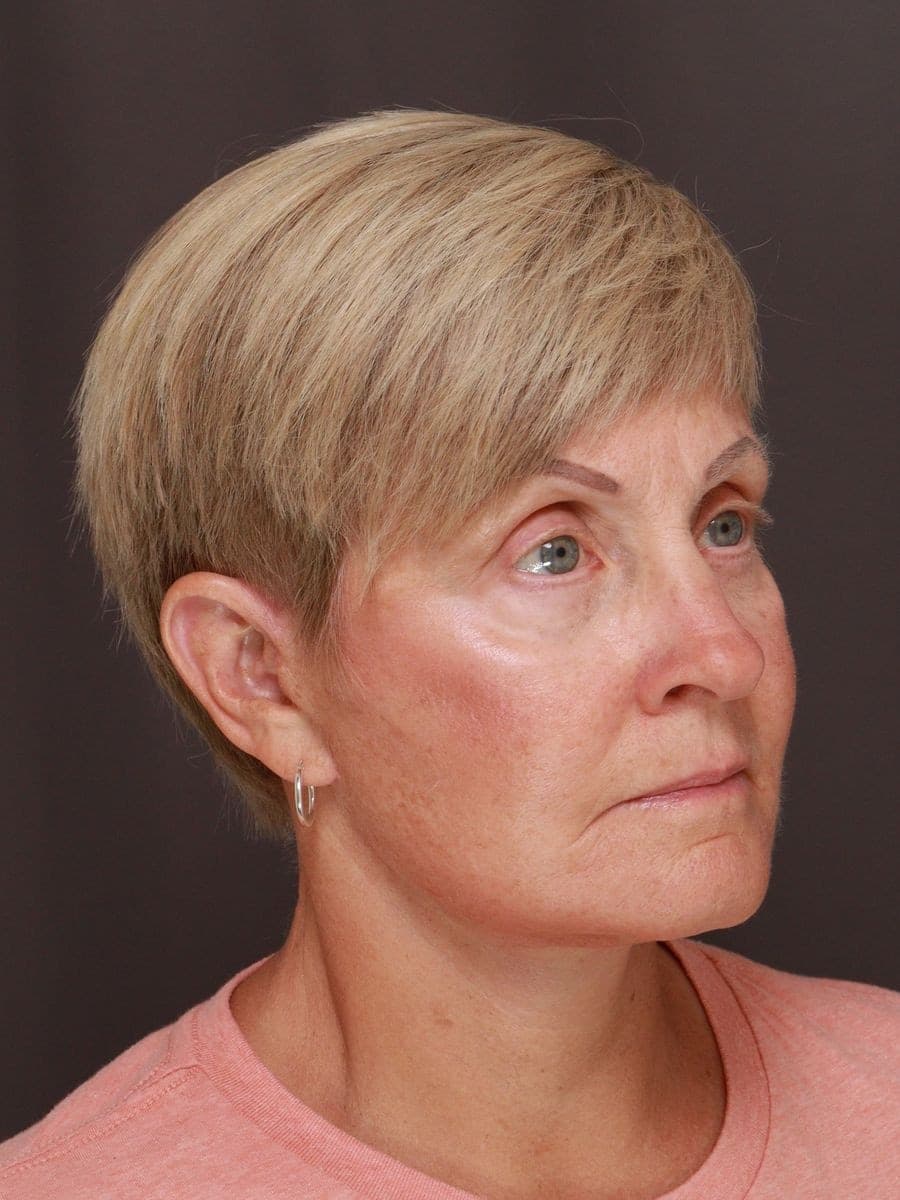
Facial plastic surgery in Salt Lake City, Utah
Insights, timelines, details, and more.
Request a ConsultationA deep plane facelift is a facelift technique that releases and repositions the deeper muscular layer of the face — the SMAS — rather than tightening the skin. Because the lift is held by deep tissue and the skin closes without tension, results move naturally, settle without a pulled look, and typically last ten to twenty years.
The procedure fully releases the deeper retaining tissues, allowing the cheek, jowls, and neck to be lifted as naturally as possible. It repositions the fat pad in the cheek, tightens the neck, and removes excess skin — lifting from the corner of the eye to the clavicles. Dr. James Manning performs the procedure in Salt Lake City, Utah.
A deep plane facelift is a good fit if you have skin laxity both above and below the jawline. Most good candidates have also noticed that the volume in the cheek has dropped and the jowls have started to sag.
It suits patients who want to treat the whole lower face at once — tightening the neck from the collarbones up to the jawline, and the face from the jawline up to the cheekbone.
The average age for a deep plane facelift is around 50. But candidacy depends less on your age and more on the age of your skin and the soft tissues of your face and neck. The best candidates are patients with significant skin laxity and drooping of the face and neck — and that can sometimes happen before 50.
If your concerns sit across both the neck and the face, a deep plane facelift addresses them together.
A deep plane facelift and a SMAS facelift both work on the same layer — the SMAS, a firm sheet of connective tissue in the cheek. Most patients benefit from a deep plane facelift; occasionally a SMAS facelift is the better fit.
| Deep Plane | SMAS | |
|---|---|---|
| How far the SMAS is released | Fully freed from the deep, immobile structures underneath, so it can move freely. | Tightened, but those connections aren’t released as fully. |
| Best suited to | Moderate to advanced laxity; treats the face and neck together. | Less aging of the face and less skin laxity. Good for younger patients or those who cannot undergo general anesthesia. |
| Anesthesia | General. | Can often be done awake, without general anesthesia. |
| The result | The most natural result of any technique — the skin closes without tension. | A great fit for the right candidate. |
The most common fear patients express is that they will no longer look like themselves. For most, the deep plane facelift produces the most natural result of any facelift technique:
Preservation techniques have become widespread in surgery in recent years, and they are especially useful in deep plane facelifting. The principle is simple: elevate the least amount of skin possible while still achieving a natural result.
In past years, much of the skin of the neck and face was lifted separately from the deep plane. That approach worked well, but it also led to more bruising and a longer recovery. Keeping the skin attached to the deeper tissue wherever possible — the same tissue that now carries the weight of the lift — changes that in two ways. First, the tension is spread more evenly across the skin, which is safer. Second, it leaves less open space beneath the skin for fluid to collect.
That last point matters more than it sounds. Collected fluid is what drives bruising and slows healing, so reducing the space available for it makes a real difference. It is also why this technique can be performed safely without drains.
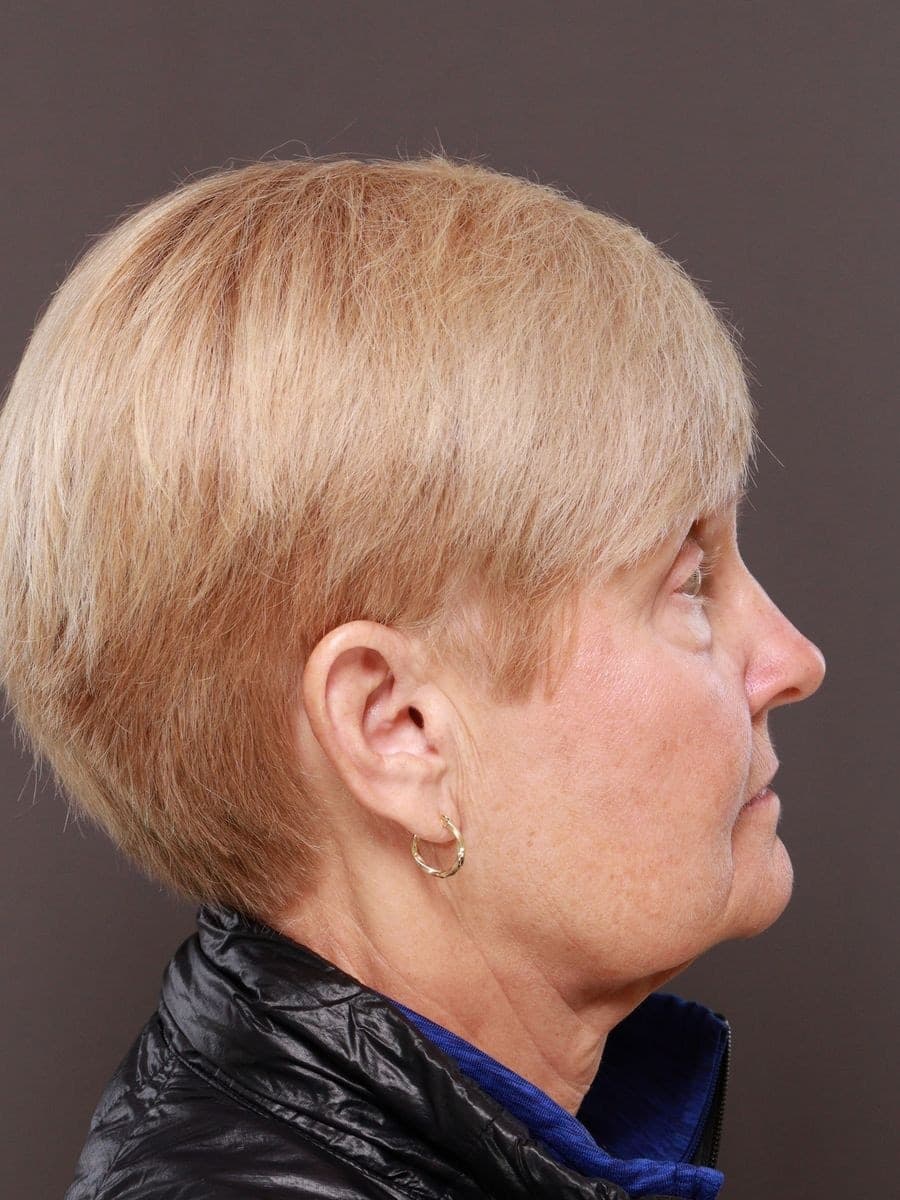
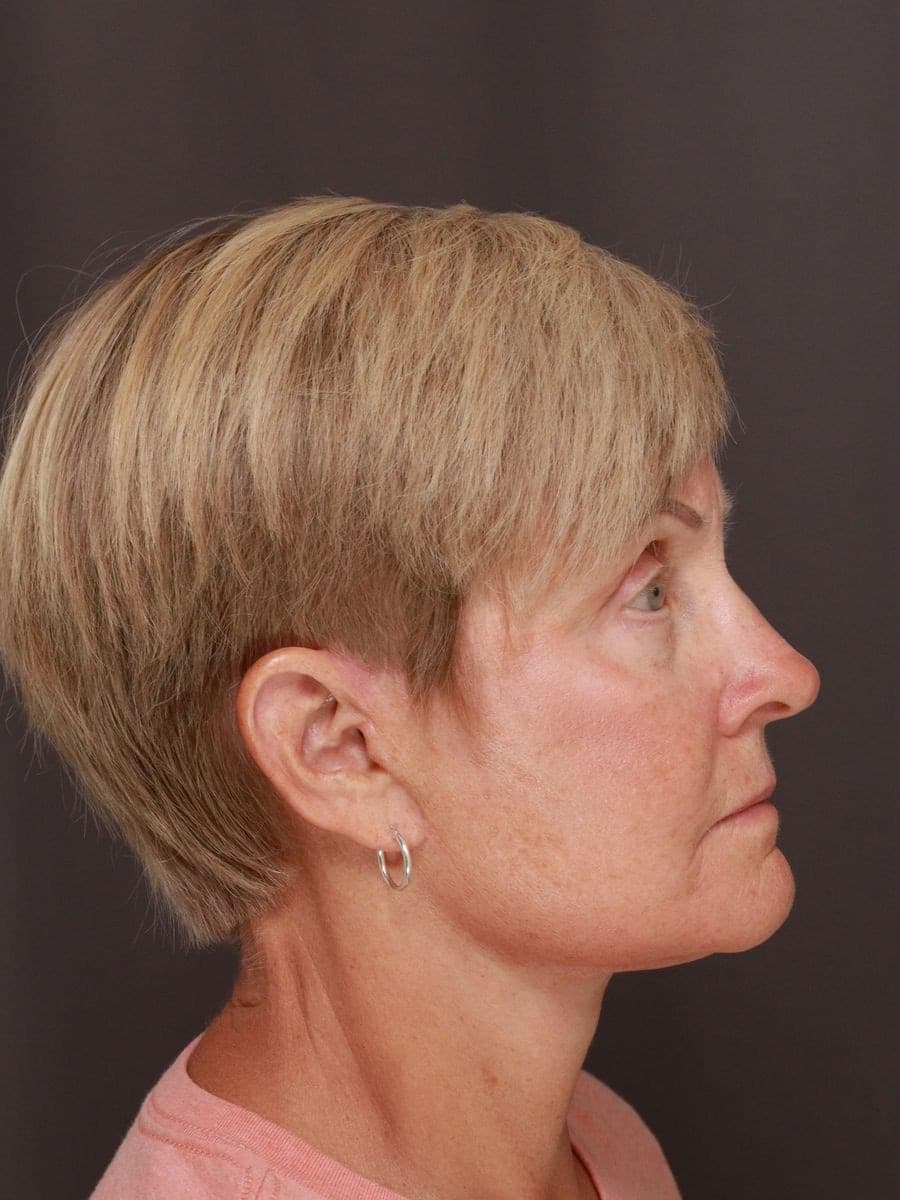
Deep plane facelift and necklift with lower blepharoplasty - 6 months post op
01 / 15
Day 0
Surgery day
Four to six hours, depending on your anatomy and any combined procedures. An hour or two in recovery, then home.
Days 2–3
Peak swelling
Swelling and bruising crest around the second or third day — expected, and temporary.
Weeks 1–2
The hardest stretch
Fairly swollen and bruised, energy low while your body recovers. The hardest stretch is also the shortest.
2 wks – 2 mos
Rapid change
Swelling drops quickly. By one to two months, people who know you well usually can’t tell.
6–12 months
Fully settled
Healing is nearly complete by six months; the last changes are subtle and slow through the first year.
A deep plane facelift restores the lower two-thirds of the face, so it pairs naturally with procedures that address the areas it does not reach.
A brow lift elevates the eyebrow and opens the upper third of the face. Upper and lower blepharoplasty refreshes the eyes by removing excess skin and reducing fullness around them. Laser resurfacing works at the surface — the facelift tightens and repositions the tissue, while the laser reduces the depth of wrinkles, smooths sun-damaged skin, and removes age spots. The two are especially synergistic.
Dr. James Manning is a double board-certified facial plastic surgeon, certified by the American Board of Facial Plastic and Reconstructive Surgery and the American Board of Otolaryngology–Head and Neck Surgery. The face is the central focus of his practice, supported by an ongoing commitment to continued learning and the refinement of technique. His goal in every procedure is the same: results that are undetectable and that last.
Medically reviewed by Dr. James Manning, MD · July 2026
A deep plane facelift repositions the deeper tissue layers of the face and neck so the weight of the lift is held on the deeper layers, not on the skin. The skin is then gently re-draped and trimmed without excessive tension to avoid looking pulled or unnatural.
They are not better and worse — they are different procedures for different degrees of aging. Both work on the SMAS layer; a deep plane facelift releases it more fully from the deeper structures, which suits more advanced laxity. A SMAS facelift releases less and works well for earlier aging, or when general anesthesia is not an option.
Patients with skin laxity above and below the jawline, dropping of the cheek volume, and sagging jowls. The average age is around 50, though candidacy depends more on the condition of your skin and soft tissues than on your age alone.
For most patients, a deep plane facelift produces the most natural result of any facelift technique. When the tissue is fully released, it can be repositioned without fighting the tension that gives a face a pulled or operated appearance.
A deep plane facelift takes four to six hours under general anesthesia, and most patients go home the same day with a caregiver for the first twenty-four hours. Swelling peaks around the second or third day, and for the first one to two weeks you can expect to stay fairly swollen and bruised while your energy recovers — the hardest stretch, and also the shortest. From two weeks to two months the changes come quickly, and by one to two months people who know you well usually can’t tell you’ve had anything done. By about six months healing is nearly complete, and any remaining changes are subtle through the rest of the first year.
No. Dr. Manning’s preservation technique keeps the skin attached to the deeper tissue wherever possible, which leaves less space for fluid to collect. That allows the facelift to be performed safely without drains, with less bruising and a faster recovery.
The duration of a deep plane facelift depends on two things: how much laxity and soft tissue descent you started with, and how quickly you age afterward.
When a patient has significant drooping of the face and neck, that tissue can be repositioned to where it sat ten or twenty years earlier. From that point forward, you generally stay about ten to twenty years ahead of where you would have been without surgery. The facelift does not stop aging — it sets the clock back, and then the clock keeps running.
How fast it runs is the real variable. Many people experience changes in their fifties and sixties that accelerate the aging process, and that pace differs from person to person.
The deep plane facelift remains the gold standard in facelifting for most surgeons, and for the right patient it tends to provide the most lasting result of any technique.
A facelift restores position, but the quality of your skin continues to age — and several treatments help maintain the result. Energy-based and light-based treatments — broadband light, laser resurfacing, microneedling, and chemical peels — help preserve the collagen and elastin in the skin, which adds longevity to the tissues. Medical-grade skin care supports the overall health of the skin, and bioidentical hormone replacement therapy may be an option as well.
broadband light · laser resurfacing · microneedling · chemical peels · medical-grade skin care
A neck lift will not affect the face above the corner of the mouth, while a facelift lifts from the corner of the eye to the clavicles. If you have laxity in the face as well as the neck, a deep plane facelift addresses both.
In experienced hands, the deep plane facelift has a strong safety record. Serious nerve injury is uncommon, and when a nerve is temporarily affected, the weakness usually resolves on its own as healing progresses. A deep knowledge of facial anatomy is what keeps the procedure safe.
The cost varies from patient to patient, depending on the extent of the procedure and whether it is combined with other treatments. A $150 consultation includes a complete evaluation, and you leave with a fully transparent quote detailing every cost — surgeon’s fee, facility fee, and anesthesia fee. The consultation fee is applied toward any surgery, treatment, or product.
We would love to see you in consultation to determine if a full deep plane facelift would best fit your needs.
Inquire About Consultations801·317·8687