Facial plastic surgery in Salt Lake City, Utah
Insights, timelines, details, and more.
Request a ConsultationA lip lift is a surgical procedure that shortens the cutaneous upper lip — the skin between the base of the nose and the top of the pink lip. Through an incision hidden in the crease under the nose, a thin strip of skin is removed in a curved, bullhorn shape. This shortens the philtrum, rolls more of the upper lip into view, and increases upper-tooth show. The result is permanent. Dr. James Manning performs the procedure in Salt Lake City, Utah.
The technical name is a subnasal bullhorn lip lift — “subnasal” because the incision sits right under the nose, “bullhorn” because the strip of skin removed is shaped like a gull’s wings or a set of horns, hugging the base of the nostrils.
I mark the amount of skin to remove first, before anything else. That measurement is the whole procedure. On average, removing 2.5 millimeters of skin shortens the philtrum by about 3.4 millimeters and adds roughly 2 millimeters of upper-tooth show; removing 5 millimeters shortens it by about 7 millimeters and adds about 4 millimeters of tooth show (Patel et al., 2022). I take the strip out, then close the deeper tissue layers so the lift is held internally and the skin closes without tension.
Because the skin is removed and the lip is rolled outward rather than filled, the change is structural. It does not wash out the way an injectable does.
A lip lift is a good fit if the distance between your nose and your upper lip has grown long, your upper lip looks thin or has thinned with age, and little or no upper tooth shows when your mouth is relaxed or slightly open.
That distance — the philtrum — naturally lengthens over the years, and as it does, the upper lip rolls inward and the teeth disappear behind it. A youthful upper lip tends to show a few millimeters of tooth at rest and sits a shorter distance below the nose (Sturm, 2022). Younger patients sometimes seek a lip lift too, for a philtrum that has been long their whole life rather than one that has aged.
A lip lift suits patients who want a lasting change to lip proportion, not a temporary one. If your concern is a long upper lip, thinning pink lip, and lost tooth show, a lip lift addresses all three at once.
Lip filler — usually hyaluronic acid — adds volume to the pink part of the lip. It is quick, it is done in the office with no incision, and it is reversible. For a patient whose only concern is a thin upper lip, filler is often the simplest answer, and it is a good one. A lip lift solves a different problem: it changes the proportion between the nose and the lip rather than adding volume.
| Lip Lift | Lip Filler | |
|---|---|---|
| What it changes | Proportion — shortens a long upper lip and rolls more of the pink lip into view. | Volume — adds fullness to the pink lip without changing its length. |
| Best suited to | A long distance between the nose and lip, with lost upper-tooth show. | A thin lip where the nose-to-lip proportion is already fine. |
| How it’s done | A surgical strip of skin removed under local anesthesia, in clinic. | Office injection — no incision. |
| How long it lasts | Permanent. | Absorbed over months; repeated to maintain. |
The most common fear patients raise about a lip lift is that it will look overdone — the “duck” lip, an upper lip flipped too far out, a result that announces itself. That fear comes from overcorrection, and overcorrection is a measurement problem:
Most of facial surgery is judgment in the moment. A lip lift is the opposite — almost all of the decision happens before surgery, with calipers and a marking pen.
The principle is simple: remove the least amount of skin that achieves the proportion we are after. A few millimeters in either direction is the difference between a natural result and an overdone one, so the planning is where the procedure is won or lost. I measure your philtral height, look at how much tooth you show at rest and in a relaxed smile, and account for the thickness and quality of your skin — then mark the strip to those specifics.
This is the anti-template part. There is no standard millimeter that works for everyone. A long philtrum on thin skin behaves differently than a moderately long one on thick skin, and a result that flatters one face would overdo another. The measurement is built for your anatomy, and that is what keeps the result looking like yours.
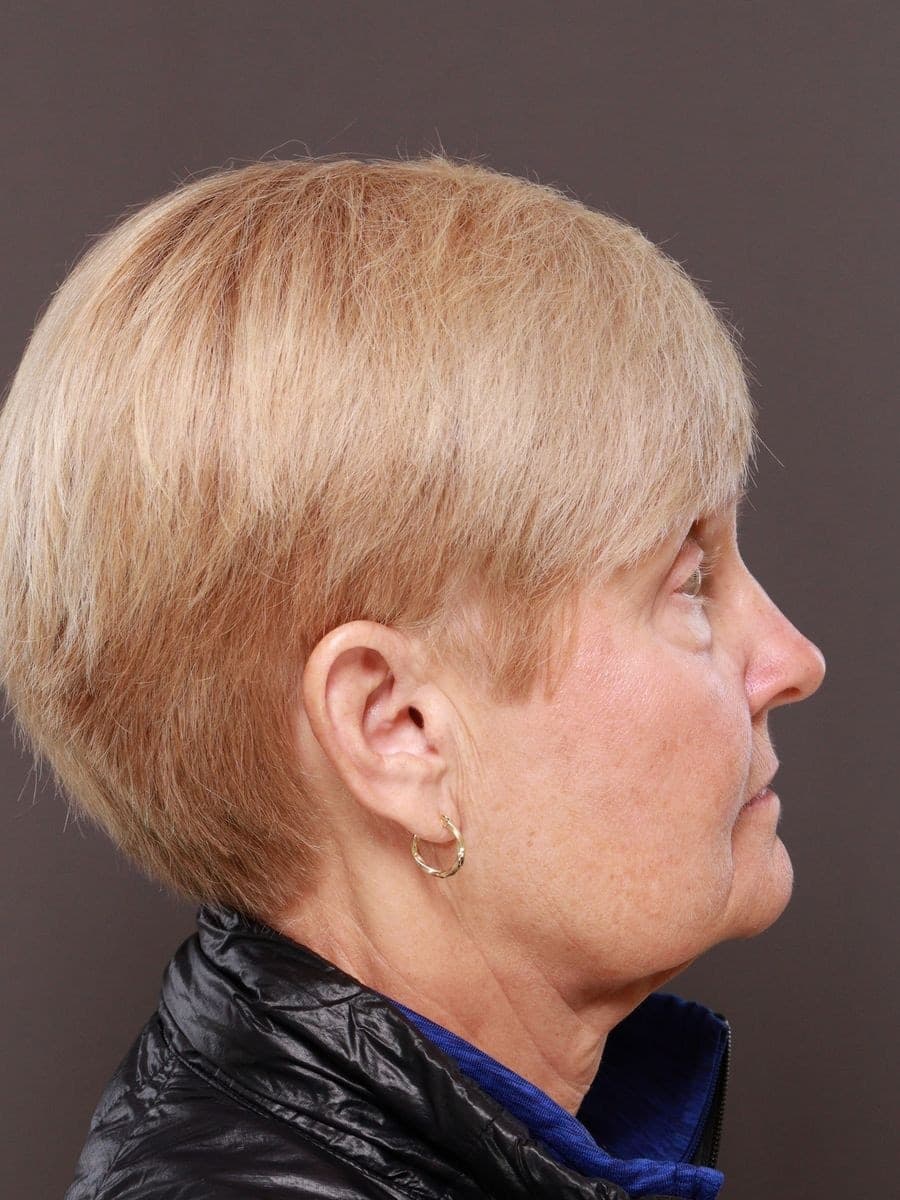
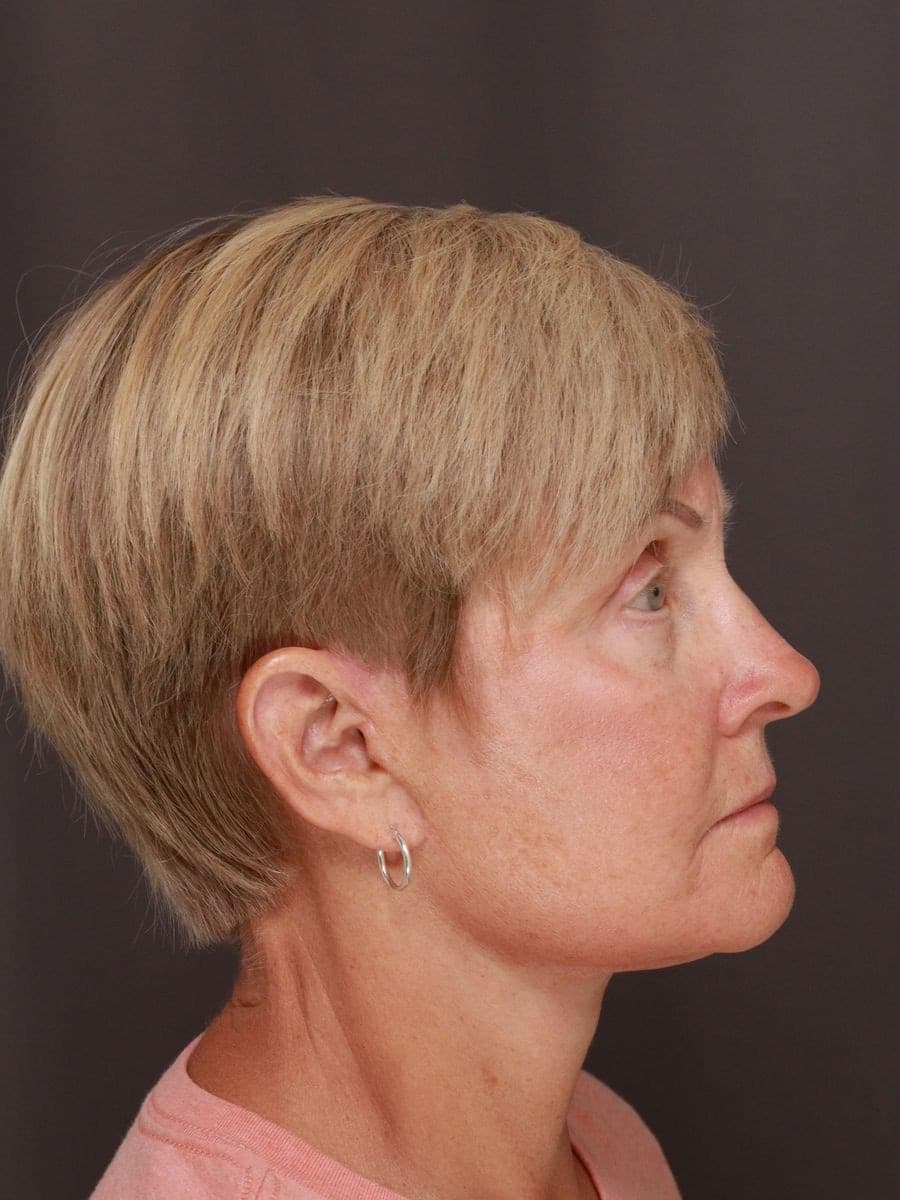
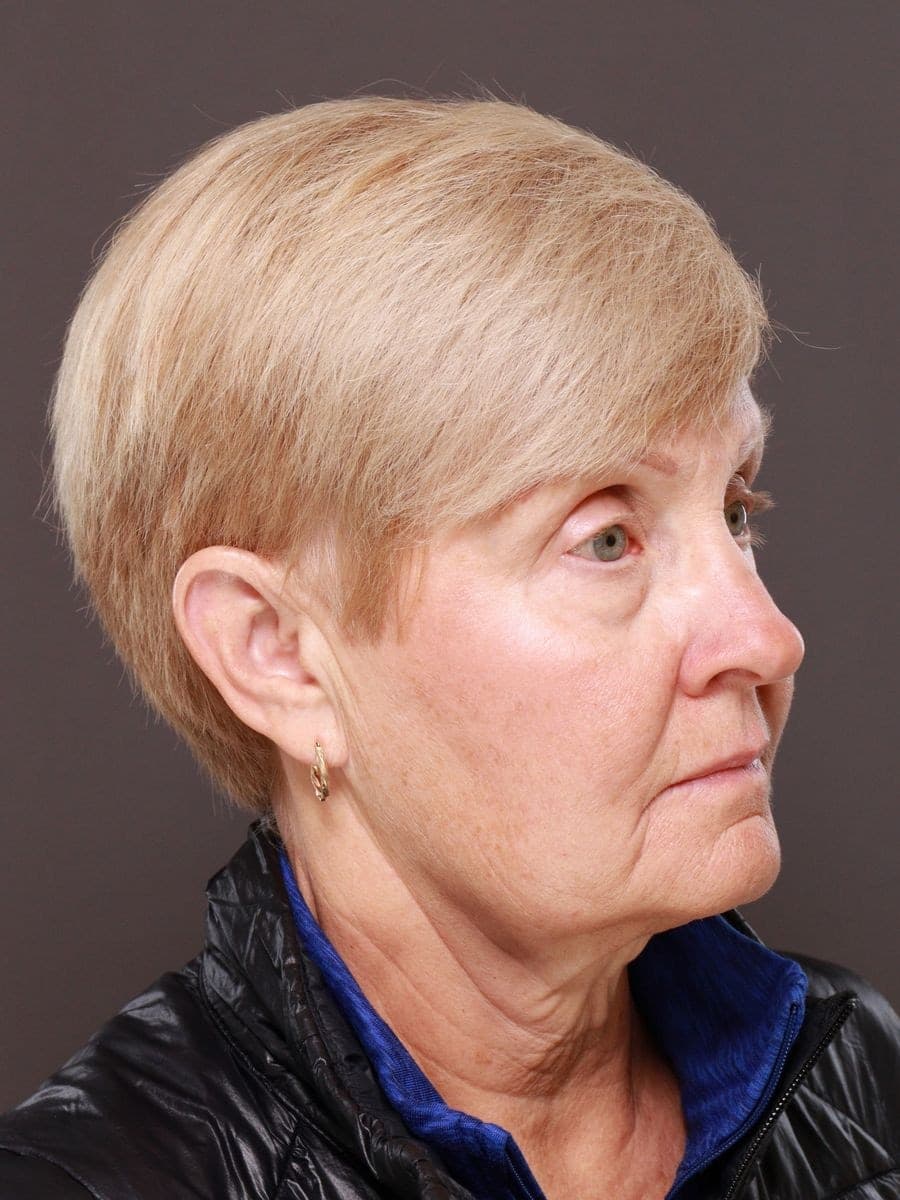
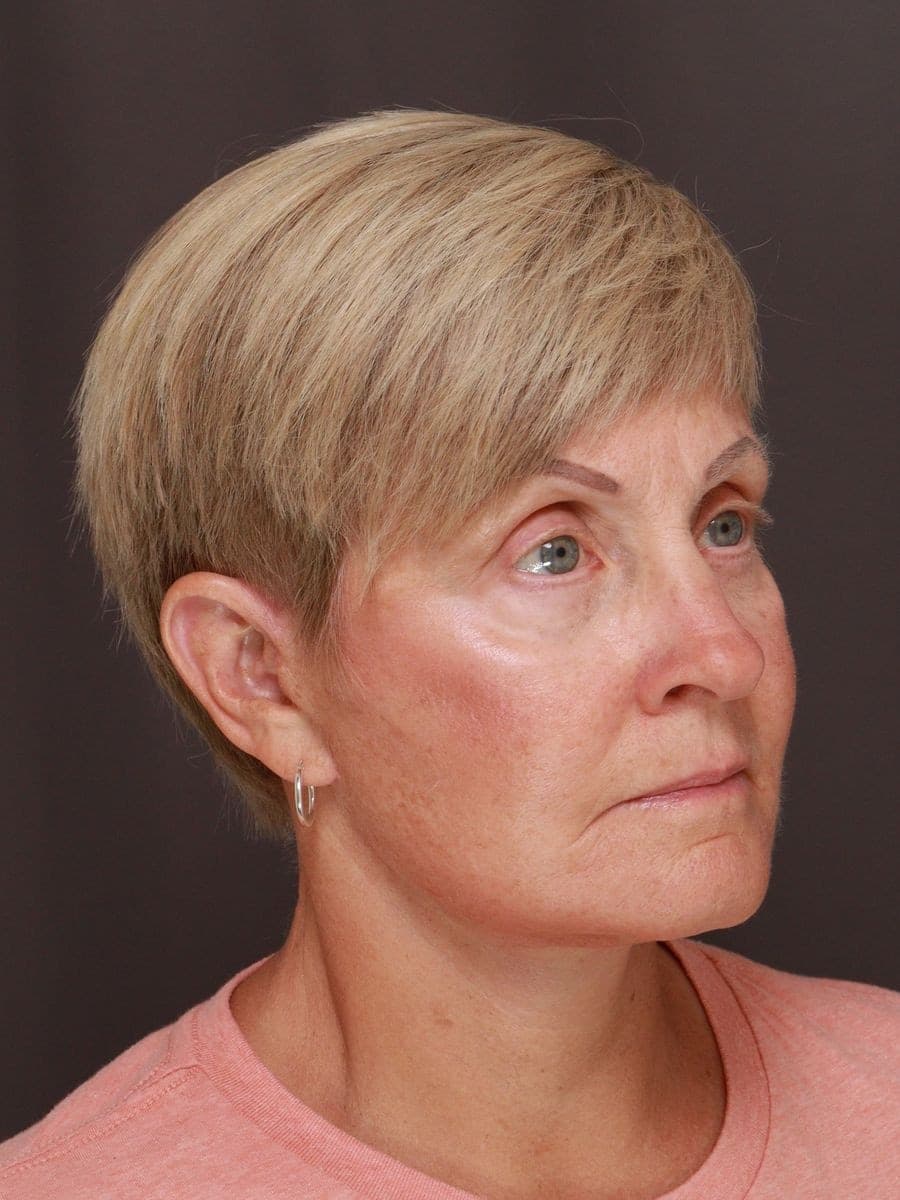
Deep plane facelift and necklift with lower blepharoplasty - 6 months post op
01 / 15
Day 0
Procedure day
Under an hour, done in the clinic under local anesthesia.
Days 3–4
Peak swelling
Swelling and some bruising are most noticeable in the first three to four days.
Days 5–7
Sutures out
Fine sutures under the nose typically come out around five to seven days.
Days 7–10
Back in public
Most patients are comfortable in public within a week to ten days, often sooner.
3–6 months
Scar fades
Most fading happens in the first three to six months, and it continues to settle out to a year.
A lip lift changes the proportion of the upper lip, so it pairs naturally with procedures that address the rest of the perioral area and the nose.
Lip filler adds volume to the pink lip after the lift has set the proportion — the two are complementary, not competing. Rhinoplasty and alar base reduction sit just above the lip lift incision, and the procedures are sometimes planned together since they share the same region. For patients treating broader facial aging, a lip lift is often combined with a deep plane facelift.
Dr. James Manning is a double board-certified facial plastic surgeon, certified by the American Board of Facial Plastic and Reconstructive Surgery and the American Board of Otolaryngology–Head and Neck Surgery. He specializes exclusively in the face, supported by an ongoing commitment to continued learning and the refinement of technique. His goal in every procedure is the same: results that are undetectable and that last.
Medically reviewed by Dr. James Manning, MD · July 2026
A lip lift is a surgical procedure that shortens the skin between the base of the nose and the top of the pink lip. A thin, curved strip of skin is removed through an incision hidden under the nose, which shortens the philtrum, rolls more of the upper lip into view, and increases upper-tooth show. The result is permanent.
“Subnasal” means the incision sits directly under the nose, in the natural crease at the base of the nostrils. “Bullhorn” describes the shape of the skin removed — a curved strip that hugs the base of the nostrils, like a set of horns. It is the most common lip lift technique and keeps the scar tucked into the shadow line under the nose.
The scar sits in the crease at the base of the nose, where the skin meets the nostrils, so it falls in a natural shadow line. It is pink and slightly firm in the early weeks, then fades and softens over the following months as it matures, with most fading in the first three to six months. A well-placed lip lift scar typically becomes difficult to see.
The amount is measured and chosen before surgery. In a three-dimensional study, removing 2.5 millimeters of skin shortened the philtrum by about 3.4 millimeters and added about 2 millimeters of tooth show; removing 5 millimeters shortened it by about 7 millimeters and added about 4 millimeters of tooth show (Patel et al., 2022). The measurement is set to each patient’s anatomy.
Filler adds volume to the pink lip and is temporary and reversible. A lip lift shortens a long upper lip, rolls the existing pink lip into view, and increases tooth show — permanently. If the distance between your nose and lip is too long, that points to a lip lift; if the lip is simply thin and the proportion is fine, that points to filler. Some patients benefit from both.
Patients with a long distance between the nose and the upper lip, a thin or aging upper lip, and little upper-tooth show when the mouth is relaxed. A youthful upper lip tends to show a few millimeters of tooth at rest and sits a shorter distance below the nose (Sturm, 2022). Both older patients whose lip has lengthened with age and younger patients with a naturally long philtrum can be candidates.
When the measurement is conservative and matched to your anatomy, the lip looks like a younger version of your own. The “overdone” result comes from removing too much skin, which is a measurement decision made before surgery. Research mapping the lip in three dimensions found the change is proportional and predictable, which is what allows the result to be planned conservatively (Patel et al., 2022).
Swelling and some bruising are most noticeable in the first three to four days, and sutures under the nose usually come out around five to seven days. Most patients are comfortable in public within a week to ten days. The scar continues to fade and soften over the following months, with most fading in the first three to six months.
A lip lift is permanent. The strip of skin is removed, so the philtrum stays shortened and the pink lip stays rolled into view. A study tracking patients over time found the amount of shortening achieved at surgery was maintained at long-term follow-up (Nagy et al., 2022).
This is the central contrast with filler. Lip filler softens and is absorbed over months, so it has to be repeated to maintain the result. A lip lift does not get touched up on a schedule — once it heals, the new proportion is the proportion.
Your face does keep aging around the lift. The skin continues to change over the years, and several treatments help maintain the overall area — laser resurfacing and microneedling support collagen in the skin, chemical peels improve surface texture and fine lip lines, and lip filler can still be added later for volume if you want it. But the structural change from the lip lift itself stays.
lip filler · laser resurfacing · microneedling · chemical peels · medical-grade skin care
The cost varies depending on your anatomy and whether the lip lift is combined with other procedures. A $150 consultation includes a complete evaluation and the measurements that determine your result, and you leave with a fully transparent quote detailing every cost — the surgeon’s fee, the facility fee, and any anesthesia or supply costs. The consultation fee is applied toward any surgery, treatment, or product.
We would love to see you in consultation to take the measurements and determine whether a lip lift is the right fit for your anatomy and goals.
Inquire About Consultations801·317·8687