Facial plastic surgery in Salt Lake City, Utah
Insights, timelines, details, and more.
Request a ConsultationFacial fat grafting is a surgical procedure that restores volume to the face using the patient’s own fat — autologous tissue, meaning tissue taken from your own body. Fat is harvested by liposuction from an area such as the abdomen or thigh, processed, and reinjected into hollow areas including the under-eye tear trough, temples, and midface.
Facial fat grafting has three steps. First, fat is harvested with gentle liposuction from a donor area — usually the abdomen, flank, or thigh. Second, that fat is processed to separate intact fat cells from fluid, blood, and oil. Third, the processed fat is reinjected in small amounts through a fine cannula into the area being restored.
The placement is deliberate. Fat is layered in small passes across the deeper tissue layers rather than deposited in one pocket — autologous fat, meaning your own fat, survives best when each parcel sits close to a blood supply. Where the fat goes, how much goes in, and at what depth are the decisions that determine whether the result looks restored or overfilled. Fat grafting to the periorbital area, the temples, and the midface each calls for a different volume and a different plane. The approach should follow the anatomy, not a fixed amount. Dr. James Manning performs the procedure in Salt Lake City, Utah.
Good candidates for facial fat grafting are patients with volume loss — hollow under-eyes, flattened temples, or a deflated midface — who have enough donor fat to harvest. Very thin patients may not have a usable donor site, which is assessed at consultation.
Patients who smoke heal less reliably, because nicotine narrows the small blood vessels that a fat graft depends on to survive. Smoking status is part of the candidacy conversation.
The areas to treat, the amount of fat to place, and whether to plan for a possible touch-up are decided in consultation, accounting for your facial proportions, your existing volume, and your goals.
Both fat grafting and dermal fillers add volume to a hollow face, and both are reasonable tools. They are not the same decision.
| Fat Grafting | Dermal Fillers | |
|---|---|---|
| What’s placed | Your own tissue — fat harvested by liposuction, processed, and reinjected. | Off-the-shelf gels, most often hyaluronic acid, a sugar molecule the body already makes. |
| Best suited to | A larger restoration, hollows that haven’t responded well to filler, or using your own tissue. | A smaller correction, a first try, or wanting something reversible. |
| Procedure & comfort | A surgical procedure with a harvest, under local or general anesthesia, and a recovery. | Placed in the office in minutes, with no harvest and little downtime. |
| The result | Lasting for the portion of fat that survives, though the amount that takes is variable. | Predictable and adjustable, most dissolvable, but temporary — reabsorbed over months to a couple of years. |
The fear most patients bring to a volume procedure is the overfilled face — the pillow look, the lumps, a face that no longer reads as their own. It is a fair fear, and it comes from too much volume placed in the wrong plane.
Not all of the transferred fat survives. A portion of every facial fat graft reabsorbs in the first months as the body decides which fat cells re-establish a blood supply and which do not.
That variability is why technique matters and why a touch-up procedure is sometimes planned. It is also why the amount placed at surgery is more than the amount that will remain — the surgeon accounts for the expected reabsorption. Anyone who tells you that all of the fat will stay is not describing what the literature shows.
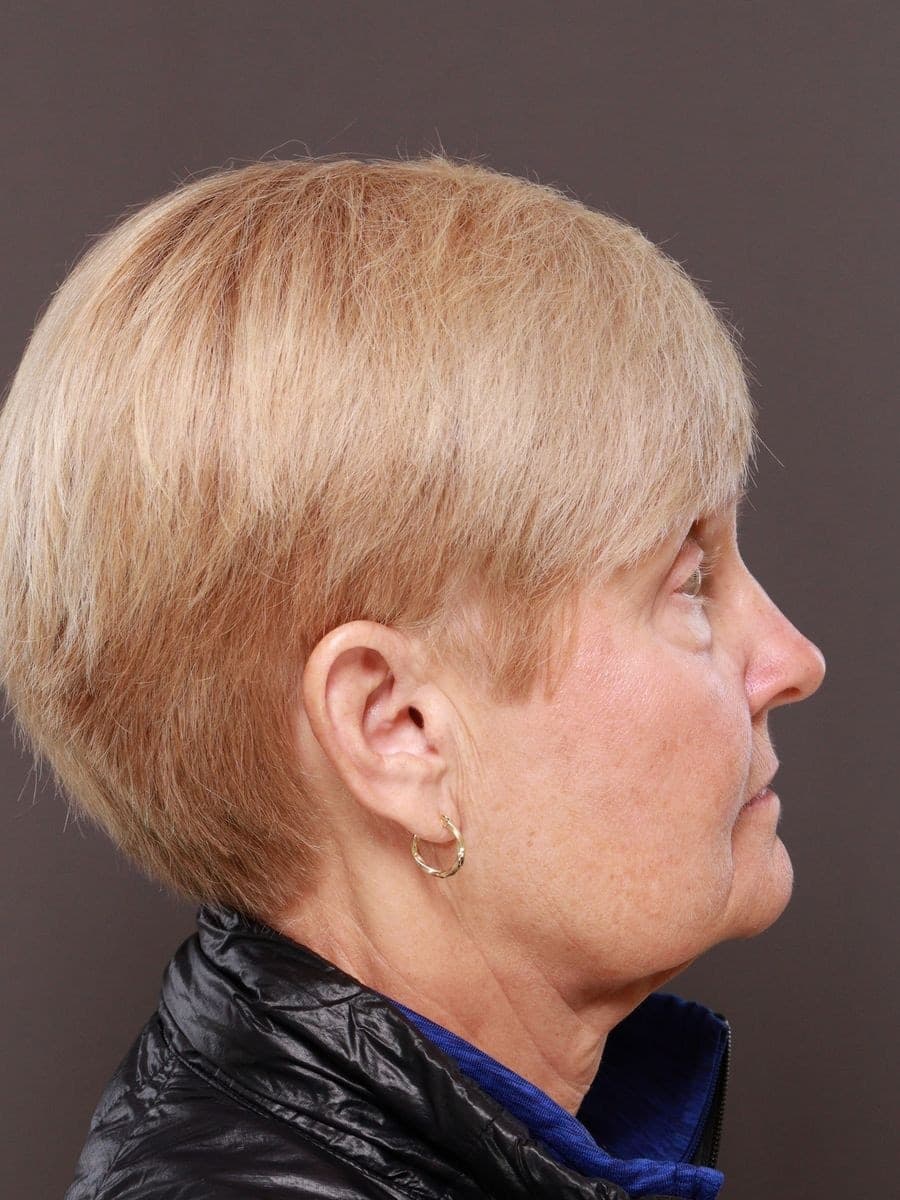
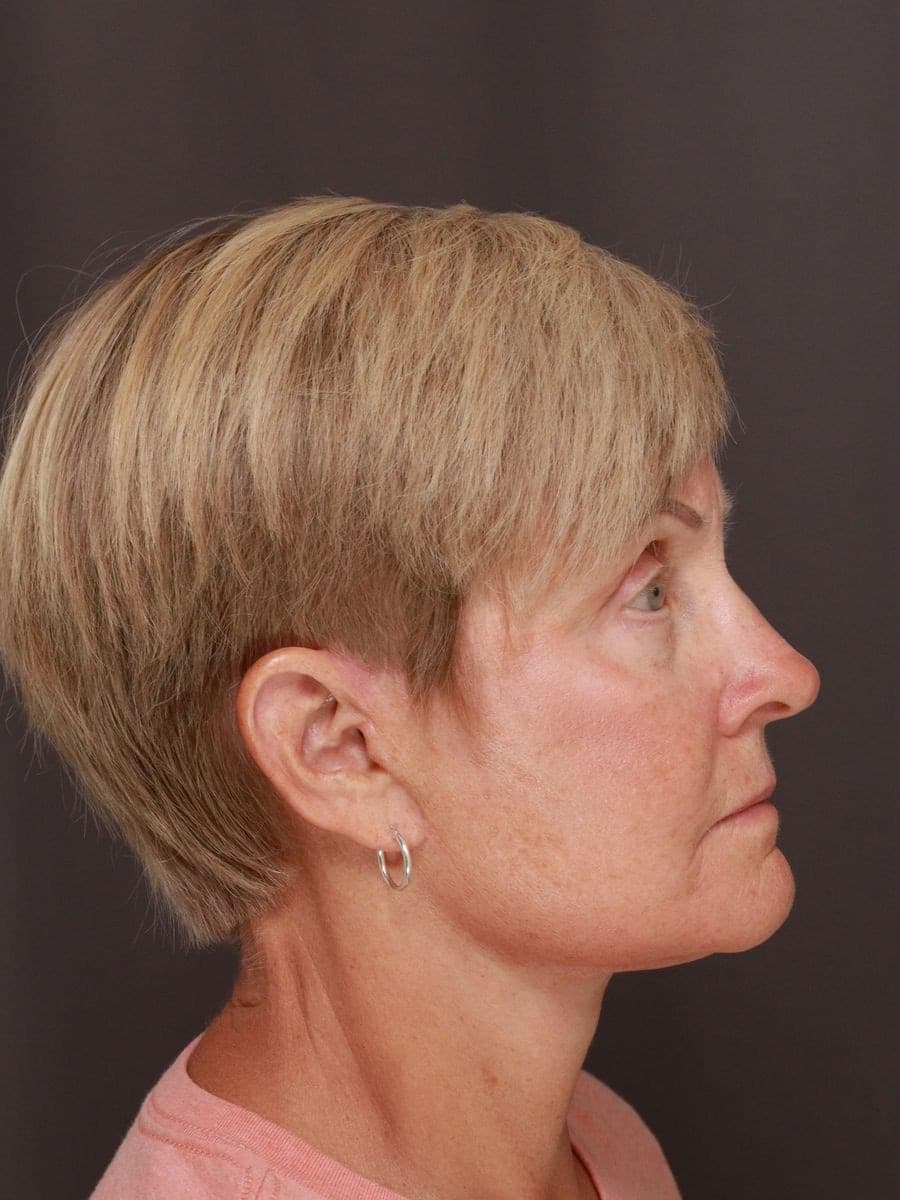
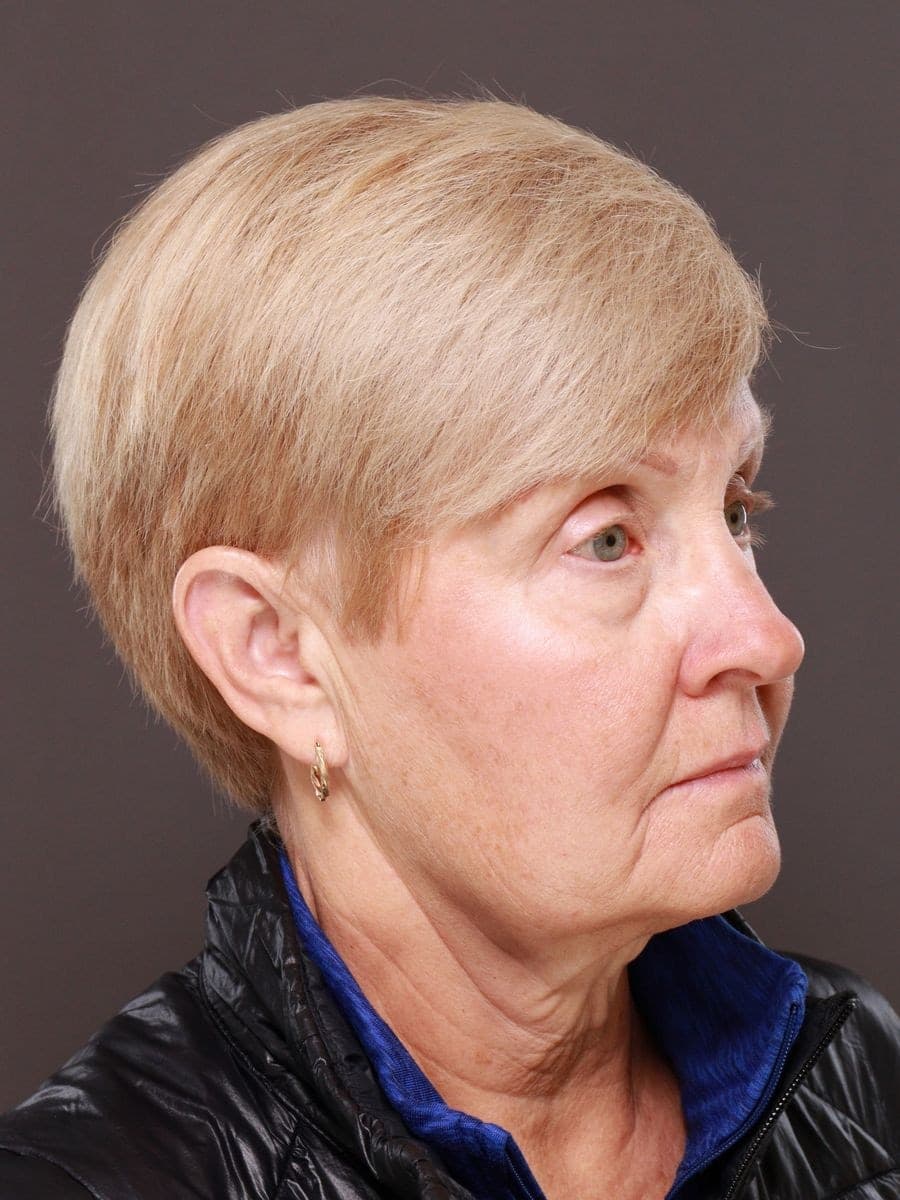
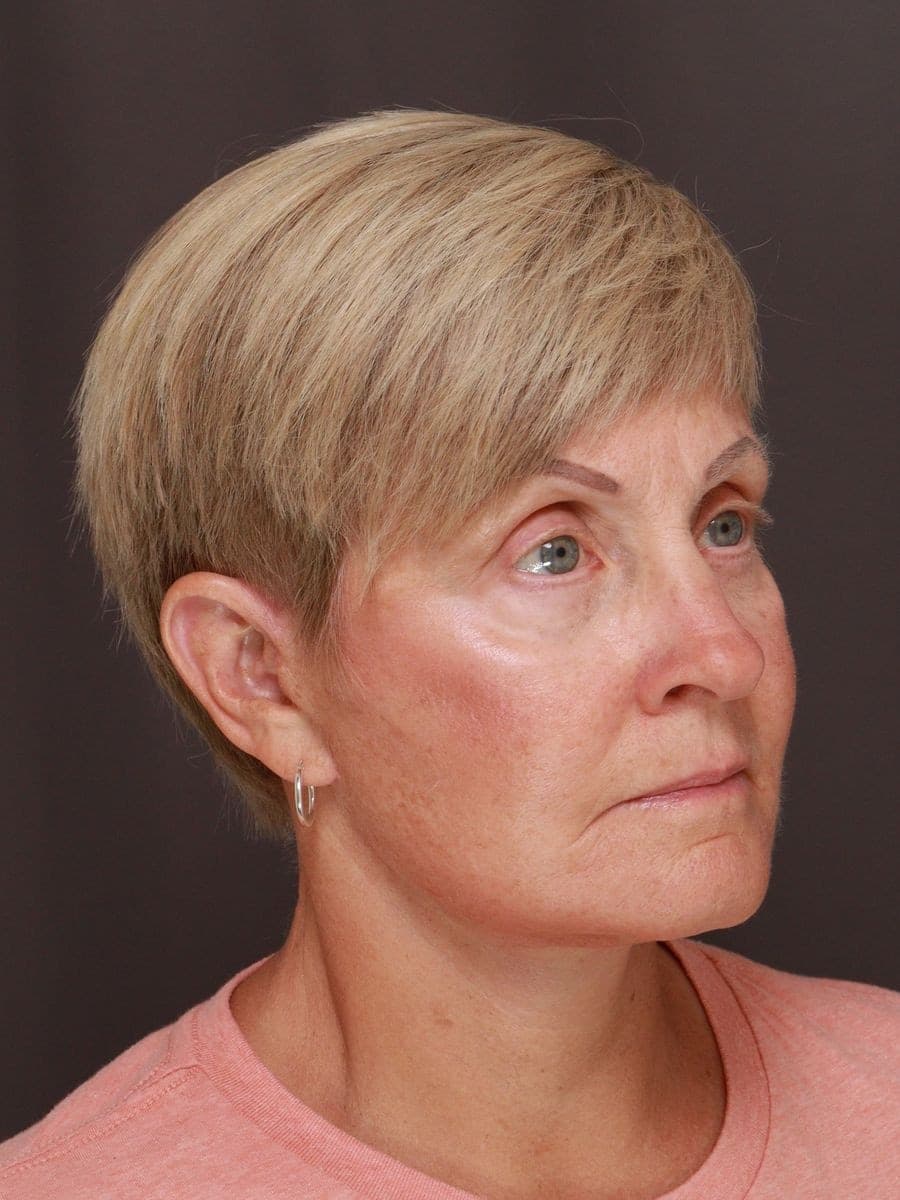
Deep plane facelift and necklift with lower blepharoplasty - 6 months post op
01 / 10
Day 0
Harvest & graft
Fat is harvested by liposuction, processed, and reinjected in small parcels into the treated areas.
Weeks 1–2
Swelling & bruising
The face often looks fuller than the final result at first, from swelling and unreabsorbed fat.
~1 month
Comfortable in public
The majority of patients are comfortable in public by about one month.
3–6 months
Take declares itself
The contour settles and refines as graft survival declares itself over this window.
Beyond 6 mo.
Lasting restoration
What remains at three to six months is generally what will last, behaving like the rest of your fat.
Facial fat grafting is often combined with eyelid and facial lifting procedures, because restoring volume and removing or repositioning tissue address different parts of the same aging face.
It is commonly performed alongside lower blepharoplasty, a deep plane facelift, and upper blepharoplasty. Dermal fillers remain an option for patients who want a smaller, reversible correction instead.
Dr. James Manning is double board-certified by the American Board of Facial Plastic and Reconstructive Surgery and the American Board of Otolaryngology–Head and Neck Surgery. He specializes exclusively in the face.
Facial fat grafting is a procedure where judgment about how much to place and where determines whether the result looks restored or overfilled. Dr. Manning places fat conservatively, in the correct plane, and accounts for the expected reabsorption when planning the amount.
Medically reviewed by Dr. James Manning, MD · July 2026
Facial fat grafting is a surgical procedure that restores volume to the face using the patient's own fat — autologous tissue, meaning tissue from your own body. Fat is harvested by liposuction, processed, and reinjected into hollow areas such as the under-eye tear trough, temples, and midface. It is performed under local or general anesthesia depending on the extent.
A portion always reabsorbs. In a systematic review and meta-analysis of 27 studies and 1,011 patients, the pooled volume retention rate was 47%, with individual studies reporting anywhere from 26% to 83% retained at three to twenty-four months. The amount placed at surgery accounts for this expected reabsorption.
That variability is why technique matters and why a touch-up procedure is sometimes planned. Anyone who tells you that all of the fat will stay is not describing what the literature shows.
The fat that survives the first few months is living tissue and tends to be durable, so it is a lasting restoration rather than a repeating one. The amount that survives is variable, and the face continues to age around the graft, so some patients choose a touch-up.
Each is the right tool in different situations. Dermal fillers are off-the-shelf, placed in minutes, often reversible, and temporary. Fat grafting uses your own tissue and lasts for the portion that survives, but it is surgery with a recovery and variable take. Which fits depends on the size of the correction and your goals, and is decided at consultation.
The overfilled look comes from too much volume in the wrong plane. The protection against it is conservative volume placed across the deeper tissue layers, with the amount matched to the hollow. The under-eye is treated especially lightly because the skin there is thin.
Facial fat grafting is generally considered safe. In a systematic review of 4,046 periorbital cases, the overall complication rate was 7.9%, and the most common issues were temporary — swelling, chemosis, and contour irregularity. Rare but serious vascular complications, including injury to vessels around the eye, have been reported in the literature; careful injection technique is intended to reduce that risk. Risks specific to you are reviewed at consultation.
Swelling and bruising at the donor site and the face are expected for one to two weeks. By about one month most patients are comfortable in public. The result refines as graft survival declares itself, and what remains at three to six months is generally what will last.
Patients with volume loss — hollow under-eyes, flattened temples, or a deflated midface — who have enough donor fat to harvest. Very thin patients may not have a usable donor site, and smoking affects healing. Candidacy is assessed at consultation.
The fat that survives the first few months is living tissue and tends to be durable — it behaves like the rest of your fat over time. There is no scheduled “redo” the way there is with most fillers.
Some patients choose a touch-up to build on a result where reabsorption was higher than hoped, and the face still ages around the graft, so volume loss can continue with time. For the portion that takes, fat grafting is a lasting restoration rather than a repeating one.
If you are interested in restoring lost facial volume, we would love to see you in consultation to determine if fat grafting would best fit your needs.
Inquire About Consultations801·317·8687