Facial plastic surgery in Salt Lake City, Utah
Insights, timelines, details, and more.
Request a ConsultationOtoplasty, also called ear pinning or ear reshaping, is surgery to correct prominent or misshapen ears. It recreates the natural fold of the upper ear, reduces and sets back the bowl of the ear, and brings the ear closer to the side of the head. The goal is a symmetric ear that sits at a natural angle — not one that looks pinned back. Dr. James Manning performs the procedure in Salt Lake City, Utah.
A prominent ear usually comes down to two things: a fold near the top of the ear that never formed fully, and a bowl in the middle of the ear — the concha — that is too deep and pushes the whole ear outward. An otoplasty addresses both.
To rebuild the missing fold — the antihelical fold, the soft ridge that curves down the upper ear — I reshape the cartilage and place permanent sutures that hold the new curve. To bring the ear closer to the head, I reduce or set back the deep conchal bowl, often with sutures that anchor it to the tissue over the mastoid bone behind the ear.
The incision sits in the crease behind the ear, where it is hidden. Where the cartilage is stiff, I score or thin it so it bends without spring-back, rather than relying on the stitches alone to fight it. The aim is a smooth, continuous contour — an ear that looks like it was always shaped that way.
Otoplasty suits children, teens, and adults who have prominent ears, ears that stick out unevenly, a missing or shallow upper fold, an overly deep conchal bowl, or a constricted “lop” ear where the top folds over.
In children, the standard is to wait until the ear cartilage is mature enough to reshape and hold its position — generally around age five to six, when the ear has reached roughly 90 percent of its adult size. By then the cartilage is developed but still workable, and the child can usually understand and cooperate with the headband and aftercare. Some surgeons operate a little earlier when a child is clearly bothered; that is a conversation for the consultation.
Teens and adults are good candidates at any age, as long as they are healthy. There is no upper age limit. Many adults pursue otoplasty after years of styling their hair to hide their ears.
The best candidates are in good general health, have realistic goals, and want the ears to look natural rather than flat against the head.
There are two broad ways to set an ear back. A suture-only technique places permanent stitches to fold and pull the cartilage into position without cutting or scoring it. A cartilage-reshaping technique scores, thins, or trims the cartilage so it holds the new shape itself, usually with sutures added to secure it.
| Suture-Only | Cartilage-Reshaping | |
|---|---|---|
| How the ear is set back | Permanent sutures fold and pull the cartilage into position without cutting or scoring it. | The cartilage is scored, thinned, or trimmed so it holds the new shape itself, usually with sutures added to secure it. |
| Best suited to | Softer, more pliable cartilage that holds well with sutures alone. | Stiffer, springier cartilage that would otherwise fight the stitches for years. |
| Anesthesia | Children: general. Teens and adults: local anesthesia with light sedation. | Children: general. Teens and adults: local anesthesia with light sedation. |
| The result | Less invasive and avoids sharp contour edges, but stiff cartilage can pull back toward its original position over time. | Relapse is less common, since the cartilage is not working against the correction for years. |
A fear I hear often is that pinned-back ears will look obvious — flat against the skull, or “pasted on,” the way some older ear surgeries did. That look comes from overcorrection:
There is no single correct ear angle. The distance an ear should sit from the head, the depth of the fold, and how far the bowl should be reduced all depend on the size of your ear, the shape of your head, and — if only one ear is prominent — the ear on the other side.
So I measure and plan each ear on its own. A common mistake is treating both ears identically when they are not identical to begin with, which can leave them looking matched on paper but mismatched in the mirror. I set each ear to the position that makes the two look balanced to the eye, then check the result from the front, side, and back before closing.
Plainly put: the right setback is the one that fits your anatomy, not a fixed number applied to everyone.
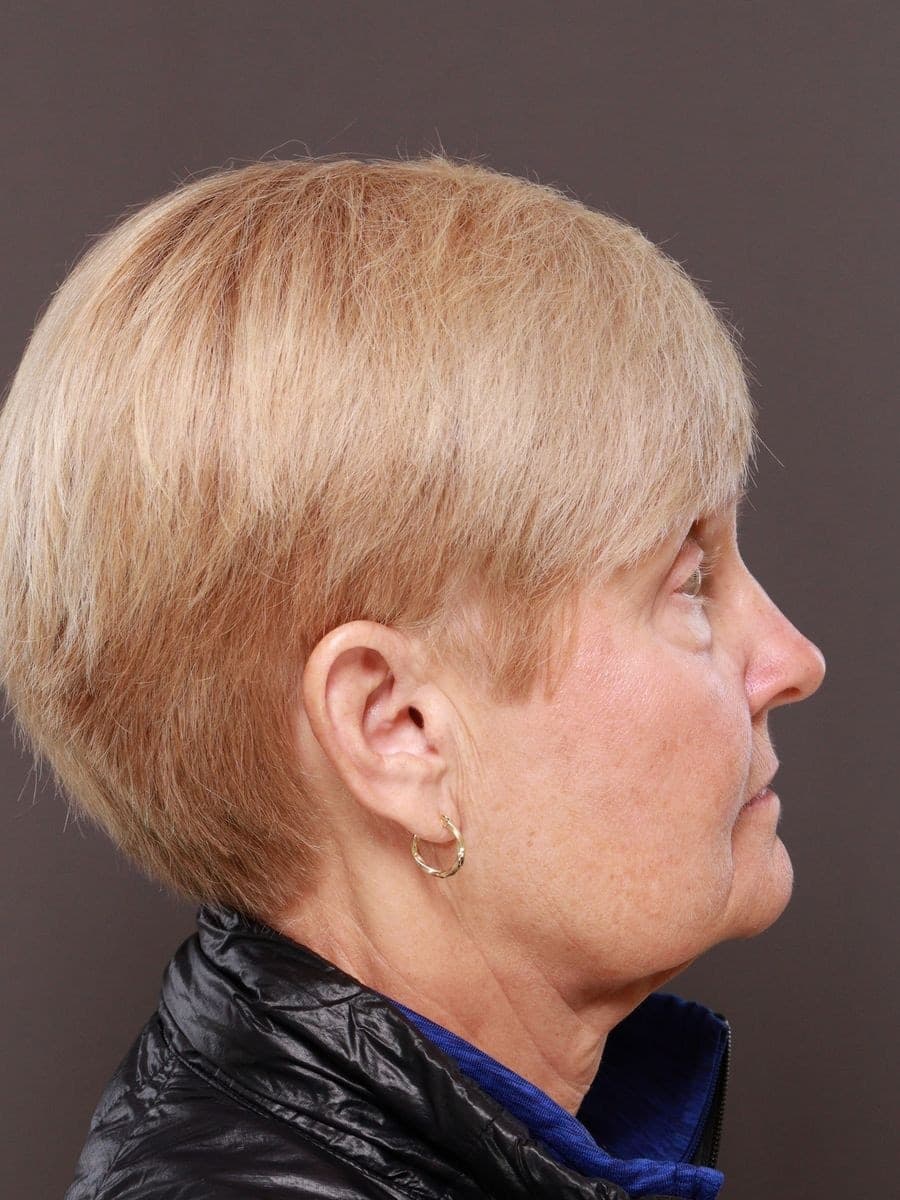
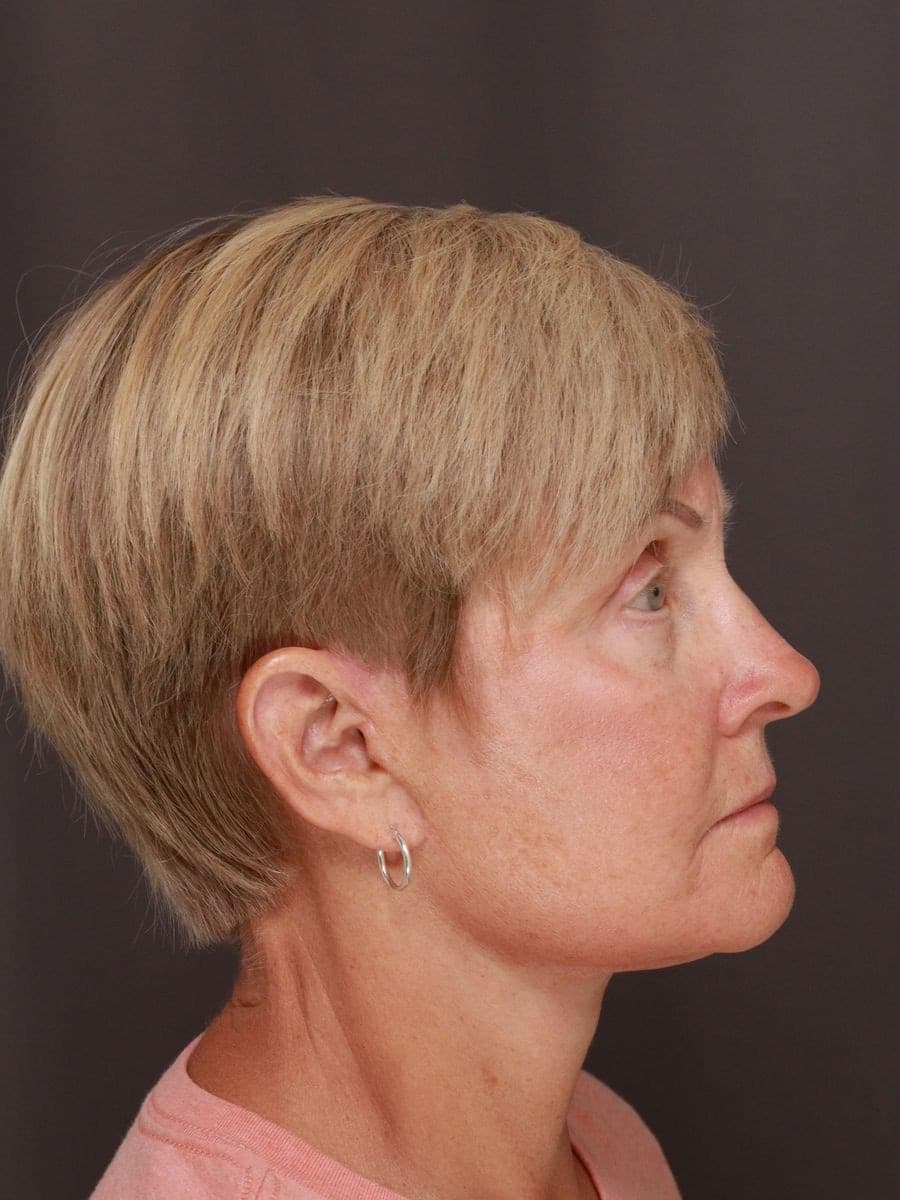
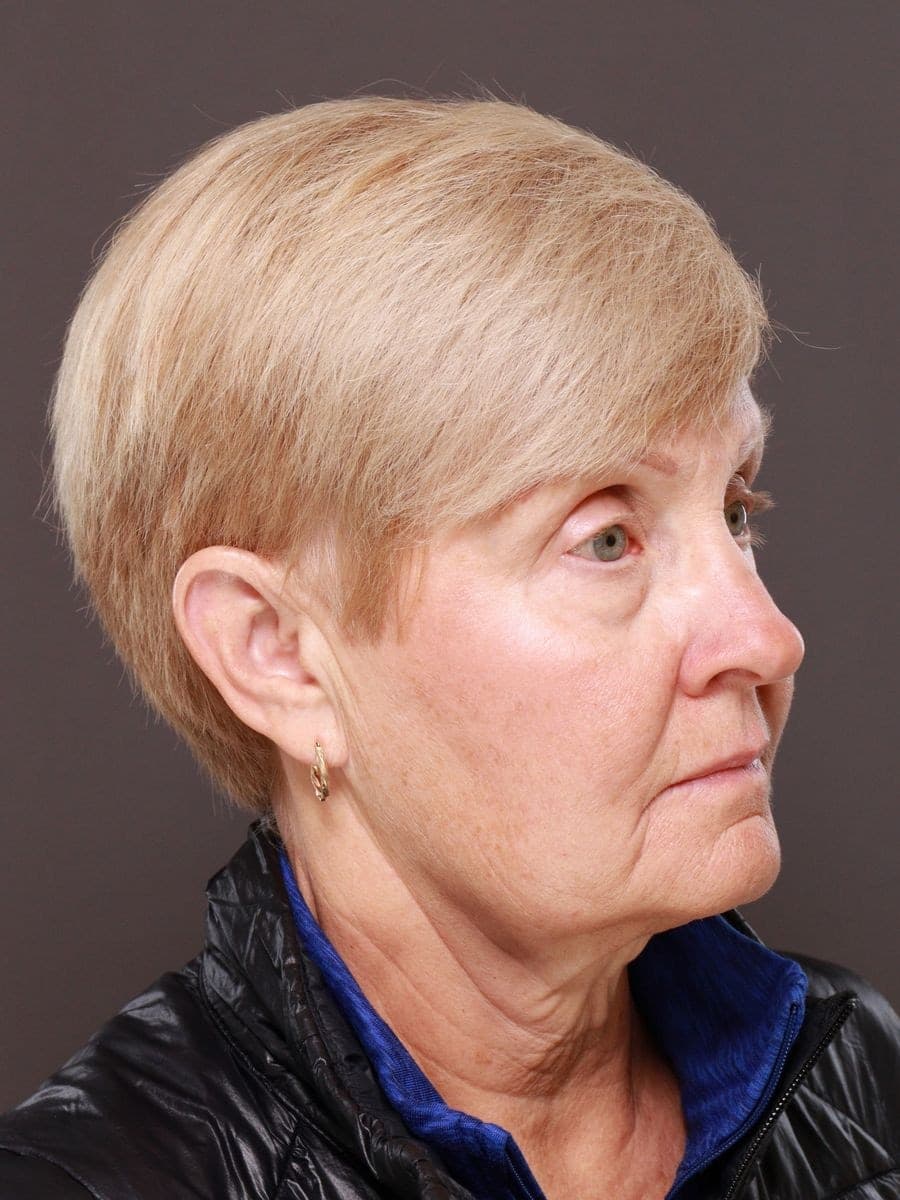
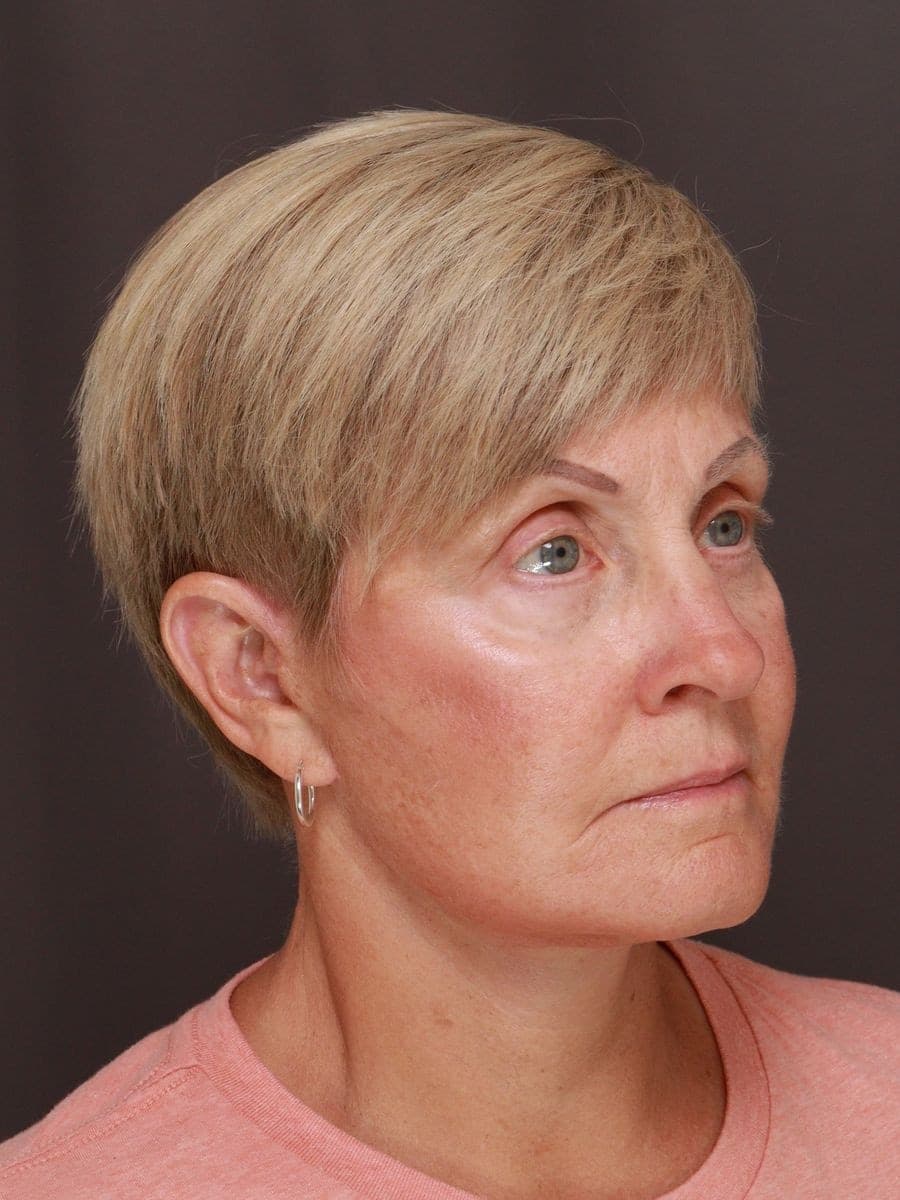
Deep plane facelift and necklift with lower blepharoplasty - 6 months post op
01 / 15
Day 0
Surgery day
One and a half to two and a half hours, depending on whether one or both ears are treated. Ears are dressed with a soft, bulky bandage and you go home the same day.
~1 week
Dressing off
The bulky head dressing comes off at your first visit. Most of the early swelling and bruising settles over the first one to two weeks.
Weeks 2–3
Night headband
A soft headband worn at night protects the ears from being bent or folded before the cartilage has stabilized.
~4 weeks
Back to sports
Contact sports, swimming, and anything that could catch or pull the ear should wait about four weeks.
Weeks–2 mos
Contour refines
The shape looks good early, but the fine contour keeps refining as residual swelling fades over the following weeks to a couple of months.
Otoplasty is often done on its own, but it pairs naturally with other ear and facial procedures.
Earlobe repair addresses torn, stretched, or gauged earlobes and is commonly combined with ear pinning to refine the whole ear in one sitting. In adults treating the face more broadly, otoplasty can be combined with a rhinoplasty or facial procedures so that recovery overlaps rather than being repeated. When the lobe itself is prominent, it can be reshaped at the same time as the upper ear so the entire ear sits in balance.
Dr. James Manning is a double board-certified facial plastic surgeon, certified by the American Board of Facial Plastic and Reconstructive Surgery and the American Board of Otolaryngology–Head and Neck Surgery. He specializes exclusively in the face, supported by an ongoing commitment to continued learning and the refinement of technique. His goal in every procedure is the same: results that are natural, balanced, and lasting.
Medically reviewed by Dr. James Manning, MD · July 2026
Otoplasty, also called ear pinning, is surgery to correct prominent or misshapen ears. It recreates the natural fold of the upper ear, reduces or sets back the bowl of the ear, and brings the ear closer to the side of the head, so the ear sits at a natural angle.
Most surgeons operate once the ear cartilage is mature enough to reshape and hold — generally around age five to six, when the ear has reached roughly 90 percent of its adult size and is still pliable. Waiting until the child can cooperate with the headband and aftercare also helps. There is no upper age limit, so teens and adults are candidates at any age.
The incision is placed in the crease behind the ear, where it is hidden from view. When a small amount of work is done from the front, those incisions are tucked into the natural folds of the ear. Scars are typically well concealed.
That look comes from overcorrection — pulling the ear in too far or bending the cartilage too sharply. A well-planned otoplasty keeps the natural, continuous contour of the ear and simply moves it to a normal angle, so the rim is still visible from the front. The aim is an ear that looks normal, not corrected.
A fear I hear often is that pinned-back ears will look obvious — flat against the skull, or “pasted on,” the way some older ear surgeries did. That look comes from overcorrection. When an ear is pulled in too far, or the upper and lower thirds are set back unevenly, it stops following the natural curve of the ear and starts to read as surgical. The most telling sign is an ear that disappears against the head when you look at it from the front, or a sharp ridge where the cartilage was bent too hard.
The goal is the opposite. A well-done otoplasty keeps the gentle, continuous contour of a normal ear and simply moves it to a normal angle and distance from the head. From the front, the rim of the ear should still be visible past the fold — that small detail is what keeps the result looking like an ear, not a correction. I plan the setback to match your other features and, when only one ear is prominent, to match your other ear.
Done this way, you still look like yourself. The change most patients notice most is that they stop thinking about their ears at all.
It depends on age. Children are generally treated under general anesthesia so they stay still and comfortable. Most teens and adults can have it done in the clinic under local anesthesia with light sedation, awake but relaxed.
A bulky dressing stays on for several days and comes off around one week. Most swelling and bruising settles over one to two weeks. A soft headband is worn at night for another two to three weeks, and contact sports, swimming, and rough play should be avoided for about four weeks. Most adults return to desk work within about a week.
For most patients, yes. Once the reshaped cartilage stabilizes, the correction generally lasts for life. The main exception is relapse, where the ear drifts back toward its original position. This is uncommon and is least likely when the cartilage is reshaped rather than held by sutures alone.
For most patients, otoplasty is permanent. Once the cartilage is reshaped and held in its new position long enough to stabilize, it generally stays there for life.
The honest exception is relapse — the ear drifting back toward its original position. This is uncommon and depends heavily on technique and on how stiff the cartilage was. When stiff cartilage is held by sutures alone, it is more likely to drift back, because the stitches are working against the cartilage’s memory; relapse is less common when the cartilage is also reshaped so it holds its own position. Wearing the protective headband as directed in the first weeks also lowers the risk.
If an ear does relapse, it can usually be revised. But for the large majority of patients, a well-planned otoplasty is a one-time, lasting correction.
It depends on technique and on how stiff the cartilage is. When stiff cartilage is held by sutures alone, relapse is more likely, because the stitches work against the cartilage's memory. Relapse is less common when the cartilage is also reshaped so it holds its own position, and wearing the protective headband as directed lowers the risk further.
Adults are good candidates at any age, as long as they are healthy. There is no upper age limit. Many adults pursue otoplasty after years of hiding their ears with their hair.
The cost varies from patient to patient, depending on whether one or both ears are treated, the extent of reshaping, and the type of anesthesia. A $150 consultation includes a complete evaluation, and you leave with a fully transparent quote detailing every cost — the surgeon's fee, the facility fee, and the anesthesia fee. The consultation fee is applied toward any surgery, treatment, or product.
We would love to see you in consultation to determine whether an otoplasty would best fit your needs, or your child’s.
Inquire About Consultations801·317·8687