Facial plastic surgery in Salt Lake City, Utah
Insights, timelines, details, and more.
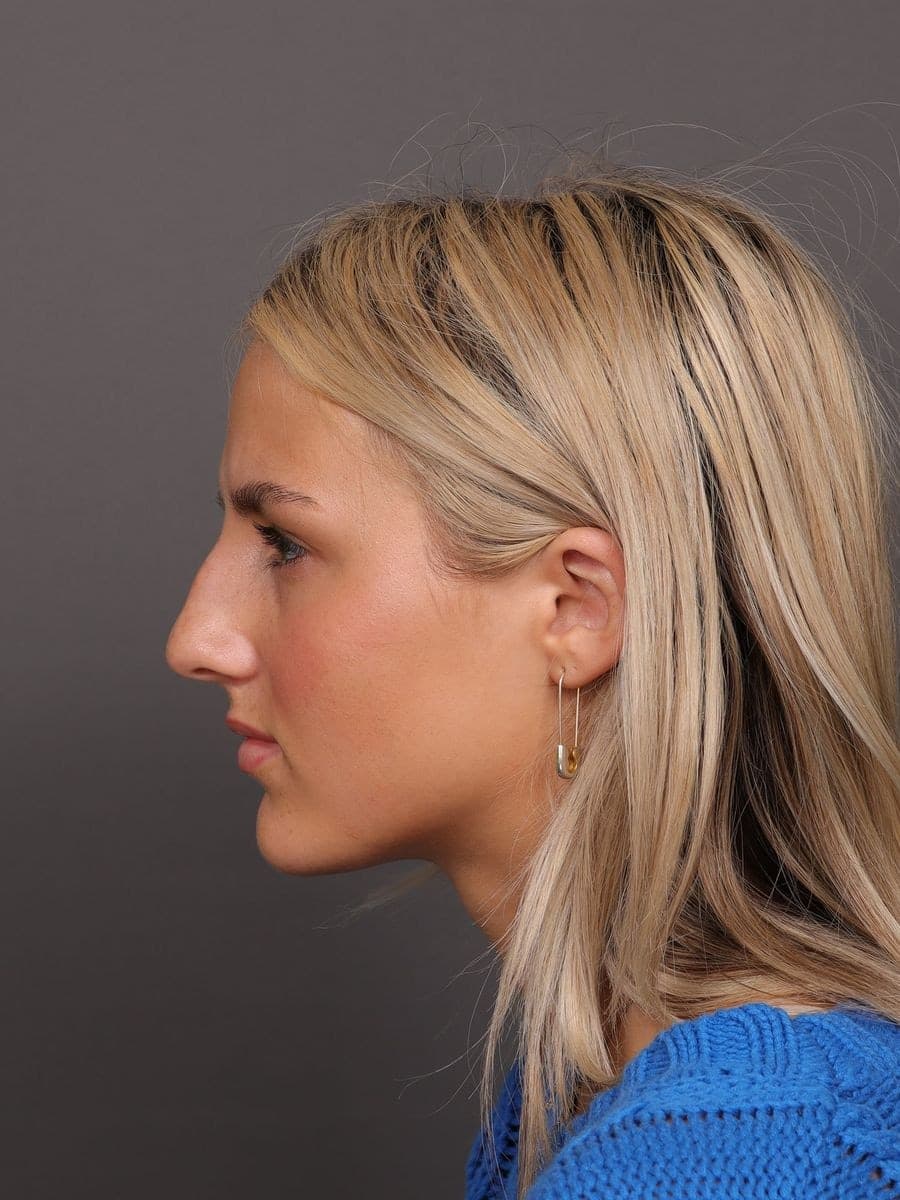
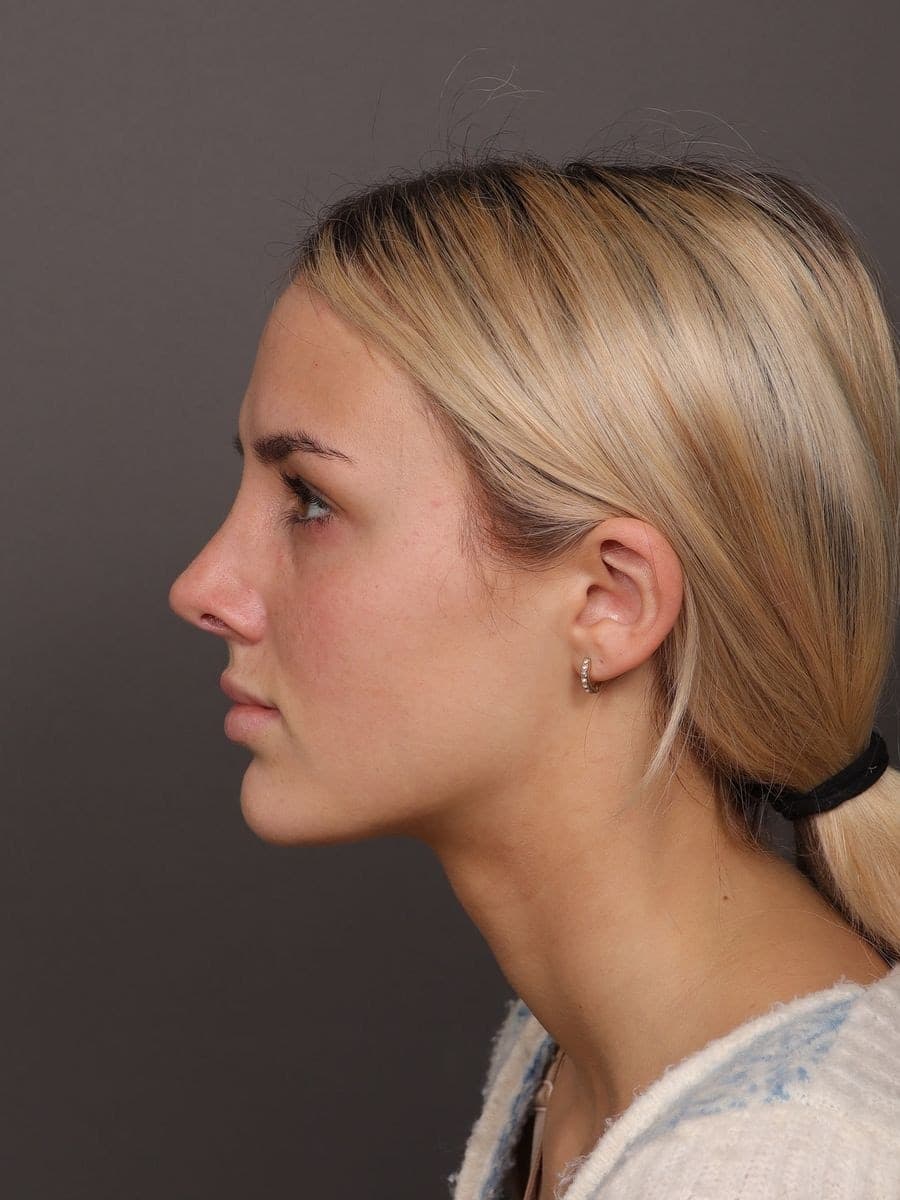
Request a ConsultationRhinoplasty reshapes the nose to change its size, shape, or proportion. Dr. Manning’s preferred approach, preservation rhinoplasty, keeps the native nasal structures intact wherever possible: rather than removing the dorsal hump — the bump on the bridge — and rebuilding the area, he lowers the existing bridge as a single unit and repositions the existing tip cartilage rather than cutting it away. Because more of the original anatomy is preserved, the result tends to look natural and the dorsal aesthetic lines stay continuous.
Preservation rhinoplasty works by lowering the nasal bridge instead of shaving it down. In a conventional reduction, a dorsal hump is removed by filing or cutting away the top of the bone and cartilage, which opens the roof of the nose and usually has to be reconstructed. In a preservation approach, the bridge is mobilized as one intact unit and lowered into the nose — the hump is brought down rather than taken off.
Two techniques do this. A push-down lowers the whole bridge by impacting it inward, typically for smaller humps — under roughly four millimeters. A let-down removes a small wedge of bone at the base on each side and settles the bridge down for larger humps. The tip is refined the same way: cartilage is repositioned and resutured rather than excised.
The dorsum — the bridge of the nose — is kept continuous, so the lines down the front of the nose stay smooth. That is the point of the approach. Dr. James Manning performs the procedure in Salt Lake City, Utah.
Good candidates for preservation rhinoplasty are primary patients — people who have not had nose surgery before — with a mild-to-moderate dorsal hump who want to keep the natural lines of their own bridge. If your nose is mostly straight from the front and your main concern is a bump on the profile, you are often a strong candidate for a preservation approach.
Candidates should be in good general health, have realistic expectations, and have a fully developed nose — typically by the mid-teens for female patients and slightly later for male patients.
Preservation is not the right tool for every nose. Significant asymmetry, a markedly crooked nose, complex anatomy, or a revision of a prior surgery is usually better served by a structural approach. Most patients are a candidate for one approach or the other — the consultation is where we determine which.
Structural rhinoplasty — the resection-based approach — removes and rebuilds. The dorsal hump is taken down, the open roof is closed, and the bridge is often reconstructed with spreader grafts, strips of cartilage placed alongside the midline to rebuild the nasal vault. It is a proven approach, and for some noses it is the right one: complex anatomy, significant asymmetry, a crooked nose, or a revision where the original framework has already been cut all call for the control that resection and rebuilding give the surgeon. Preservation rhinoplasty does less — it lowers what is already there instead of removing it, so there is often no open roof to close and no graft to place. The tradeoff is that it is not suited to every nose; it works best on straightforward primary cases.
| Preservation | Structural | |
|---|---|---|
| Dorsal hump | Lowered as one intact unit. | Removed, then the roof is rebuilt. |
| Tip cartilage | Repositioned and resutured. | Often partly excised and reshaped. |
| Dorsal lines | Native lines kept continuous. | Rebuilt — depends on grafting. |
| Best for | Primary cases, mild-to-moderate humps. | Complex anatomy, asymmetry, revisions. |
| Spreader grafts | Often not needed. | Frequently used. |
A 2025 systematic review and meta-analysis of randomized trials found preservation techniques had a lower rate of recurrent hump and revision than structural reduction, with equal-to-better functional and cosmetic scores (Shim et al. Facial Plast Surg Aesthet Med. 2025; PMID 40227917). I prefer preservation when the anatomy allows it, and structural when it does not. The approach should follow the nose, not the other way around.
The most common concern patients bring to a rhinoplasty consultation is not about the surgery — it is about looking like someone else afterward. The fear is reasonable. An operated nose is one of the more recognizable results in facial surgery, and the part patients notice most is when the natural lines of the bridge are gone.
The default in rhinoplasty for decades was to remove tissue and rebuild — take the hump off, close the roof, add grafts. It works, but every cut and every graft is a place healing can be unpredictable, and the more of the original bridge that is removed, the harder it is to keep the lines natural.
My preference runs the other way. When the anatomy allows, I would rather lower the structures you already have than remove and replace them. Less is cut, there is often nothing to rebuild, and the dorsal lines stay yours. This is not a technique applied to every patient on principle — it is a preference exercised when the nose is a good fit for it, and set aside when it is not.
Preservation is a conviction about doing as little as the result requires. For the right candidate, that means a refined profile with less surgical disruption and a faster return to a natural appearance.
Day 0
Surgery day
The bridge is lowered as one unit rather than removed and rebuilt; the tip cartilage is repositioned and resutured.
Week 1
Cast comes off
A cast over the dorsum, often with small internal splints, stays on for the first week.
Weeks 1–2
Bruising resolves
Bruising and swelling around the eyes are common and resolve on their own.
Weeks 3–4
Back to public
Most patients are comfortable in public by three to four weeks, though the tip is still refining.
1 month – 1 year
Full refinement
The majority of swelling has resolved by one month; the nose continues to refine over a full year.
Rhinoplasty is commonly combined with a chin implant. The chin and nose define the profile — when one is addressed without the other, the result can feel incomplete. Adding chin projection at the time of surgery balances the profile and often makes the nose appear more proportionate without additional reduction.
Alar base reduction — narrowing the base of the nostrils through small excisions at the alar crease — is sometimes performed alongside rhinoplasty when the nostrils are wide relative to the rest of the nose. It is a separate maneuver and is only indicated when the anatomy calls for it. A bump shave is a smaller, in-office refinement for a minor profile irregularity, distinct from full rhinoplasty.
Dr. James Manning is double board-certified by the American Board of Facial Plastic and Reconstructive Surgery and the American Board of Otolaryngology–Head and Neck Surgery. He specializes exclusively in the face. Preservation rhinoplasty is a deliberate part of his practice — he favors lowering and repositioning a patient’s native structures over removing and rebuilding them whenever the anatomy allows, and reserves the structural approach for the noses that need it.
Medically reviewed by Dr. James Manning, MD · July 2026
Preservation rhinoplasty is a surgical approach that keeps the native structures of the nose intact wherever possible. Instead of removing the dorsal hump — the bump on the bridge — and rebuilding the area, I lower the existing bridge as one unit and reposition the tip cartilage rather than cutting it away. Because more of the original anatomy is preserved, the result tends to look natural.
Both lower the bridge rather than removing it. A push-down impacts the whole nasal bridge inward and is typically used for smaller humps, under roughly four millimeters. A let-down removes a small wedge of bone at the base on each side and settles the bridge down, and is used for larger humps. The choice depends on the size of the hump and the anatomy.
Neither is universally better — they suit different noses. A 2025 systematic review and meta-analysis of randomized trials found preservation techniques had a lower rate of recurrent hump and revision surgery than structural reduction, with equal-to-better functional and cosmetic outcomes (Shim et al. Facial Plast Surg Aesthet Med. 2025; PMID 40227917). Structural rhinoplasty remains the better choice for complex anatomy, significant asymmetry, and revisions.
Good candidates are primary patients — those who have not had nose surgery before — with a mild-to-moderate dorsal hump who want to keep the natural lines of their own bridge. Significant asymmetry, a markedly crooked nose, complex anatomy, or revision cases are usually better served by a structural approach. Candidacy is determined at consultation.
Because the approach lowers your own bridge rather than removing and rebuilding it, the dorsal aesthetic lines that make your nose look like yours stay continuous. A 2025 meta-analysis of patient-reported outcomes found dorsal preservation produced satisfaction and aesthetic scores comparable to conventional hump reduction (Kim et al. Aesthet Plast Surg. 2025;49(17):4846-4856; PMID 40195129). The goal is a nose that looks balanced, not one that looks operated on.
Most patients wear a cast over the dorsum for the first week, often with small splints inside the nose. Bruising and swelling around the eyes resolve within one to two weeks, and most patients are comfortable in public by three to four weeks. The tip refines last; the nose continues to refine over a full year.
Because the bridge is lowered rather than opened and rebuilt, there is often less to heal across the top of the nose, and swelling over the bridge tends to settle quickly.
The result at one month is not the final result. Patience is part of the process.
Recurrence is uncommon. Because the bridge is lowered and fixed in place rather than removed and rebuilt, the dorsal hump rarely returns. Your individual case is best discussed at consultation.
It can. Preservation techniques keep the internal nasal valve and keystone area — structures that affect airflow — intact, and a deviated septum or other obstruction can often be addressed at the same time. If breathing is a concern, that should be part of the consultation discussion.
Rhinoplasty produces lasting structural changes. Once the bridge has been lowered and healed in its new position, the result is permanent. Because the dorsum is kept intact rather than removed and rebuilt, recurrence of the hump is uncommon. The nose will continue to age naturally over time, but the structural change made during surgery remains.
Your consultation includes a complete evaluation of your anatomy and goals. From there, we build a plan specific to you, and you'll leave with a fully transparent quote detailing every cost: the surgeon's fee, the facility fee, and the anesthesia fee. Your $150 consultation fee is applied toward any surgery, treatment, or product.
If you would like to discuss your nose, we would love to see you in consultation to determine if a rhinoplasty would best fit your needs.
Inquire About Consultations801·317·8687