Facial plastic surgery in Salt Lake City, Utah
Insights, timelines, details, and more.
Request a ConsultationFUE — follicular unit extraction — is a hair-transplant harvesting method in which individual follicular units, natural groupings of one to four hairs, are removed one at a time from the donor area with a sub-millimeter punch and replanted into thinning or balding zones. No linear strip of tissue is taken, so FUE leaves no linear scar. Dr. James Manning performs the procedure in Salt Lake City, Utah.
Recipient sites — the small incisions that determine where each graft will be placed and at what angle — are made by hand by Dr. Manning, one site at a time. This is the most technically demanding part of the procedure and the step most directly responsible for the direction, density, and hairline design of the final result.
Once the sites are created, grafts harvested individually from the donor area are placed into each one. Because each unit is extracted on its own rather than from a strip, the donor area is usually trimmed short for the session, and it heals with tiny scattered dots rather than a line. Careful handling preserves graft survival and, with it, a permanent result.
FUE is a good fit if you want to keep the option of wearing your hair short. It is a frequent choice for athletes and for anyone who wants to avoid a linear scar, and it is well-suited to smaller sessions where individual extraction is efficient.
Because grafts can be taken one at a time and placed precisely, FUE is also a strong option for scar-camouflage work and for harvesting donor hair used in beard and eyebrow restoration. As with any transplant, a donor assessment at consultation determines graft availability and sets the scope of what’s possible.
Good candidates have a largely stable pattern of loss, sufficient donor density, and realistic expectations. Progressive loss that is not yet stable is managed medically before or alongside surgery, and vitamin deficiencies or thyroid dysfunction — often overlooked contributors — are identified and addressed first.
FUE (follicular unit extraction) removes grafts one at a time with a sub-millimeter punch and leaves no linear scar — only tiny dot scars that stay concealable even with very short hair. That makes it a good fit for patients who wear their hair short and want to keep that option. The trade-off is that FUE is more labor-intensive per graft, and the donor area is usually trimmed short for the session.
FUT (follicular unit transplantation) removes a strip of donor tissue, which allows for a larger number of grafts in a single session and hides its scar under longer hair. Which technique fits depends on your goals, your donor area, and how you like to wear your hair — a decision made together at consultation.
| FUE | FUT | |
|---|---|---|
| How grafts are harvested | Removed one at a time with a sub-millimeter punch. | Removed as a strip of donor tissue, then dissected into individual units. |
| Scarring | Tiny scattered dot scars; concealable even with very short hair. | A single fine linear scar, hidden under longer hair. |
| Best suited to | Patients who wear their hair short, athletes, smaller sessions, scar camouflage, and beard or eyebrow donor work. | Larger graft counts in a single session and patients with more extensive recession. |
| The session | Donor area trimmed short; more labor-intensive per graft. | Donor area need not be shaved; higher yield per sitting. |
Unnatural-looking transplants share a few predictable causes — and with FUE they are largely preventable:
Dr. Manning trained under a technician with 30 years of experience in hair restoration — spending a full year focused on the procedure before performing it independently. He performs a significant portion of each transplant himself, including recipient site creation by hand, one site at a time. Many surgeons delegate this work entirely.
Dr. Manning performs two to three hair transplants per week. It is one of his primary areas of focus — not an ancillary offering.
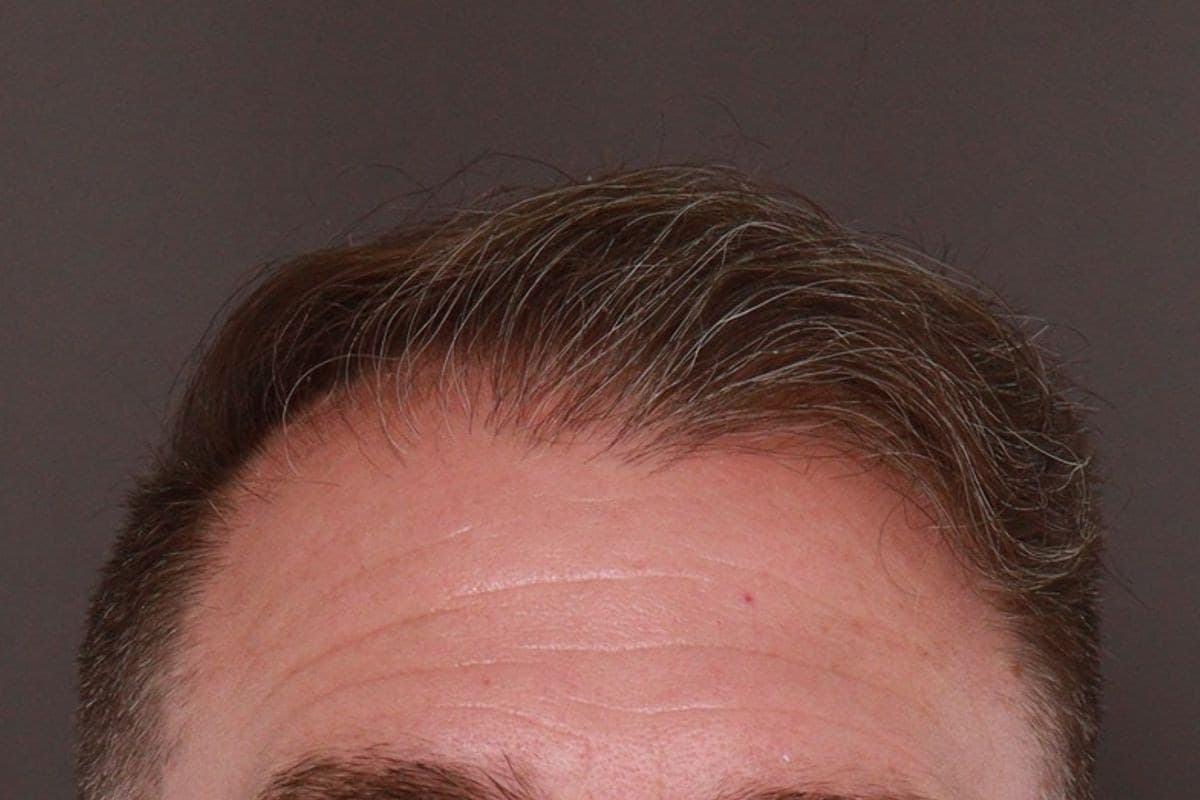
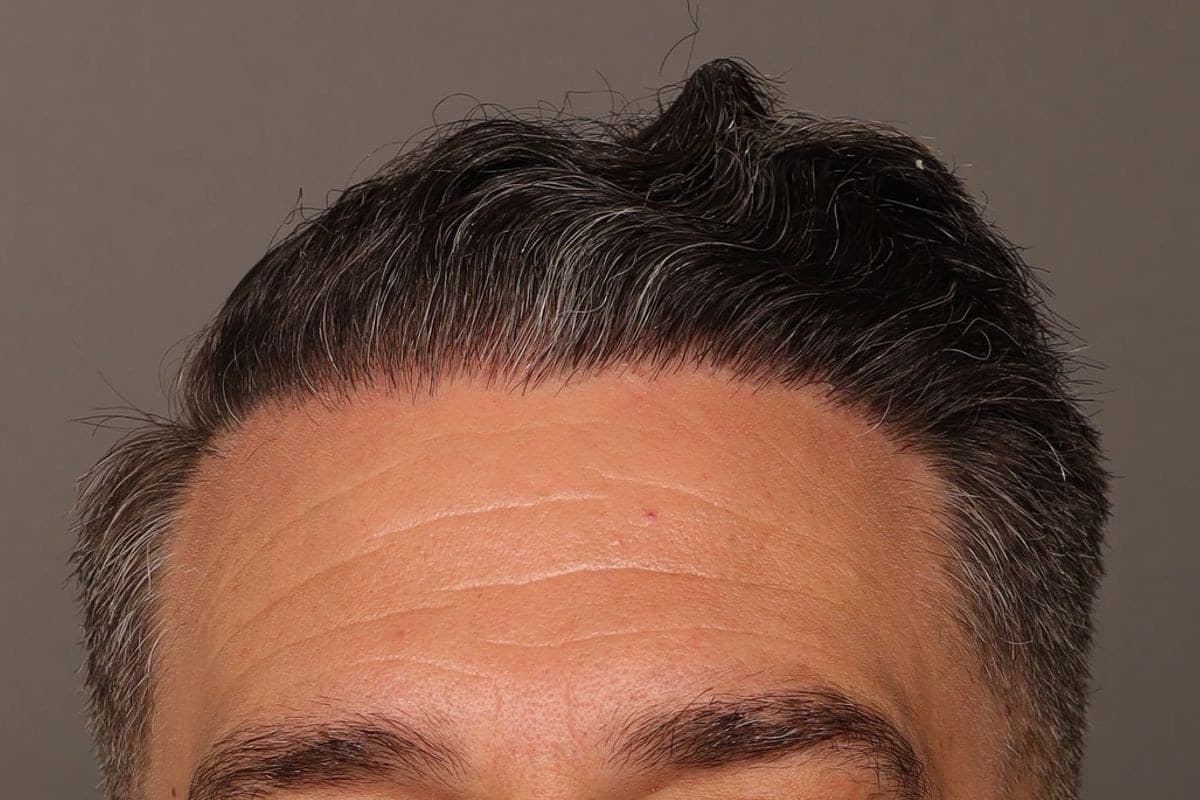
FUE Transplant focused on the frontal scalp and vertex - 2 years post-op
01 / 04
Day 0
Session day
Several hours under local anesthesia, depending on the graft count. Outpatient — you go home the same day.
Days 5–7
Crusts clear
Tiny crusts form around each graft and clear over about five to seven days. Many patients return to non-strenuous work within a few days.
2–4 wks
Expected shedding
Transplanted hairs shed. This is expected and does not indicate graft failure — the follicles are cycling into a rest phase.
3–4 mos
Growth starts
New growth begins and continues to thicken and mature over the following months.
9–12 mos
Meaningful density
Meaningful density arrives, with the result still improving toward its final form.
12–18 mos
Final result
The final result settles, with hair growing and behaving like native hair.
Nonsurgical treatments pair well with FUE as ongoing maintenance. Prescription oral and topical therapies address the hormonal drivers of loss and protect the native hair that surgery cannot reach. FUE also supplies the donor grafts for eyebrow and facial hair restoration, where individual extraction is well suited to the small, precise work these areas require.
For patients seeking a more comprehensive change in facial framing, a transplant pairs well with hairline lowering surgery — also called forehead reduction.
Dr. James Manning is double board-certified by the American Board of Facial Plastic and Reconstructive Surgery and the American Board of Otolaryngology–Head and Neck Surgery. He specializes exclusively in the face.
Dr. Manning trained under a technician with 30 years of experience in hair restoration — spending a full year focused on the procedure before performing it independently. He performs a significant portion of each transplant himself, including recipient site creation by hand, one site at a time. Many surgeons delegate this work entirely.
Dr. Manning performs two to three hair transplants per week. It is one of his primary areas of focus — not an ancillary offering.
Medically reviewed by Dr. James Manning, MD · July 2026
FUE, or follicular unit extraction, is a hair-transplant harvesting method in which individual follicular units — natural groupings of one to four hairs — are removed one at a time from the donor area with a sub-millimeter punch and replanted into thinning or balding zones. Because no linear strip of tissue is taken, FUE leaves no linear scar.
FUT removes a single strip of donor tissue, which is then dissected into follicular units; FUE removes each unit individually with a tiny punch. FUE leaves only scattered dot scars that stay concealable even with very short hair, but it is more labor-intensive per graft and usually requires the donor area to be trimmed short for the session. FUT allows larger graft counts in one sitting and hides its scar under longer hair. Both are permanent when the grafts survive.
FUE suits patients who want to keep the option of wearing their hair short, athletes, and anyone who wants to avoid a linear scar. It is well-suited to smaller sessions and to scar-camouflage work, and it is the usual choice for harvesting donor hair for beard and eyebrow restoration. As with any transplant, good candidates have stable donor density and realistic expectations, and progressive loss is managed medically alongside surgery.
FUE does not leave a linear scar. Each sub-millimeter punch heals as a tiny round dot that is difficult to see and stays concealable even with a very short haircut. This is the main reason patients choose FUE over the strip technique. The donor area is typically trimmed short for the session so the surgeon can work efficiently across it.
FUE is performed under local anesthesia as an outpatient procedure, and a typical session runs several hours depending on the graft count. Tiny crusts form around each graft and clear over about five to seven days, and many patients return to non-strenuous work within a few days. Strenuous activity and direct sun exposure to the scalp should be avoided for two to three weeks.
The transplanted hairs shed at two to four weeks — this is expected and does not indicate graft failure. New growth begins around three to four months, meaningful density arrives by nine to twelve months, and the final result settles at twelve to eighteen months, growing and behaving like native hair.
Yes. The follicular units harvested for FUE come from the donor area at the back and sides of the scalp, which is genetically resistant to the hormonal changes that cause androgenetic hair loss. Once those grafts take, they keep that resistance and grow for life.
Native hair around and behind the transplanted zone can still thin over time, which is why ongoing nonsurgical management remains important after surgery. Protecting the hair that surgery cannot address preserves the overall result and may reduce the need for additional sessions.
The cost varies from patient to patient, depending on the graft count and whether FUE is combined with other treatments. A $150 consultation includes a complete donor assessment, and you leave with a fully transparent quote detailing every cost. The consultation fee is applied toward any surgery, treatment, or product.
If you are considering an FUE hair transplant and want to understand what’s possible for your specific anatomy, we’d love to see you in consultation.
Inquire About Consultations801·317·8687


