Facial plastic surgery in Salt Lake City, Utah
Insights, timelines, details, and more.
Request a ConsultationFacial hair transplantation is a surgical procedure that restores the beard, mustache, sideburns, or goatee by moving follicular units from a donor area — typically the occipital and parietal scalp — to the face. Grafts are placed individually at very acute angles, nearly flat to the skin, to match the natural growth direction of facial hair. It is performed under local anesthesia and is permanent. Dr. James Manning performs the procedure in Salt Lake City, Utah.
Recipient sites — the small incisions that determine where each graft sits and at what angle it grows — are made by hand by Dr. Manning, one site at a time. On the face, these sites are cut at very acute angles, roughly 5 to 15 degrees, so the transplanted hairs lie flat against the skin the way native beard and mustache hair does. Angle and direction are the technical crux of the procedure.
Grafts are harvested from the donor scalp, most often by follicular unit extraction (FUE) — which removes follicular units (the natural groupings of one to four hairs in which hair grows) individually with a small punch and leaves no linear scar. Follicular unit transplantation (FUT), a strip harvest, is available where maximizing graft yield matters. The grafts are then placed one at a time into the prepared sites. Both harvest techniques produce permanent results when grafts are handled carefully and survival is maintained.
Good candidates for a facial hair transplant have patchy, sparse, or absent beard, mustache, or sideburn growth, sufficient scalp donor density, and realistic expectations about coverage. Common reasons include genetics, scarring from injury or prior surgery, and gender-affirming facial masculinization.
Donor supply is assessed at consultation. A full beard typically requires roughly 2,000 to 3,000 grafts; a mustache often runs about 400 to 800; each sideburn or cheek zone usually takes a few hundred. The exact count depends on the area being filled and the density goal.
For patients on testosterone for facial masculinization, transplantation is typically deferred until at least one year of therapy, so the areas that will benefit most can be identified accurately. Patients planning facial masculinization surgery should raise it in consultation, since bony changes can shift the position of transplanted hairs.
FUE removes grafts one at a time and leaves no linear scar in the donor area. For facial hair work it is the technique used in most cases. FUT removes a strip of donor tissue, which yields a larger number of grafts in a single session — worth considering for a full beard built from scratch, for revision work, or when scalp donor density is the limiting factor.
| FUE | FUT | |
|---|---|---|
| How grafts are harvested | Individual follicular units removed one at a time with a small punch. | A strip of donor tissue is removed in one piece. |
| Best suited to | Most facial hair cases — moderate graft counts, manageable donor demand. | A full beard built from scratch, revision work, or when scalp donor density is the limiting factor. |
| Donor scarring | No linear scar; donor scalp can be worn short. | A linear donor scar, with faster overall graft yield. |
| The result | Faster donor-area recovery; the technique used in most facial hair cases. | A larger single-session graft count, at the cost of the donor scar. |
Unnatural-looking facial hair transplants share a few predictable causes, and they’re largely preventable:
Dr. Manning trained under a technician with 30 years of experience in hair restoration — spending a full year focused on the procedure before performing it independently. He performs a significant portion of each transplant himself, including recipient site creation by hand, one site at a time, at the acute angles facial hair requires.
The growth pattern shifts across the face — from the mustache to the cheek to the jawline — and that variation cannot be templated. It is specific to the patient’s anatomy.
Dr. Manning performs two to three hair transplants per week. Facial hair restoration is part of that practice, not an ancillary offering.
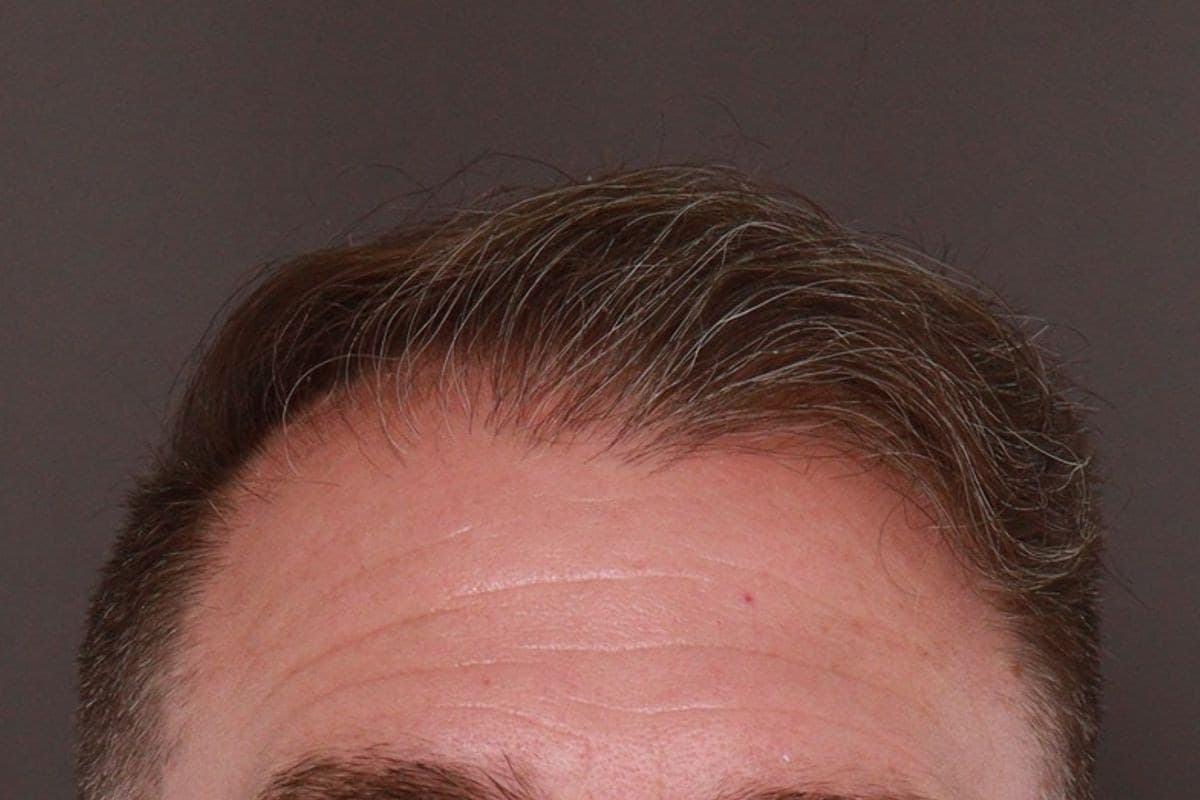
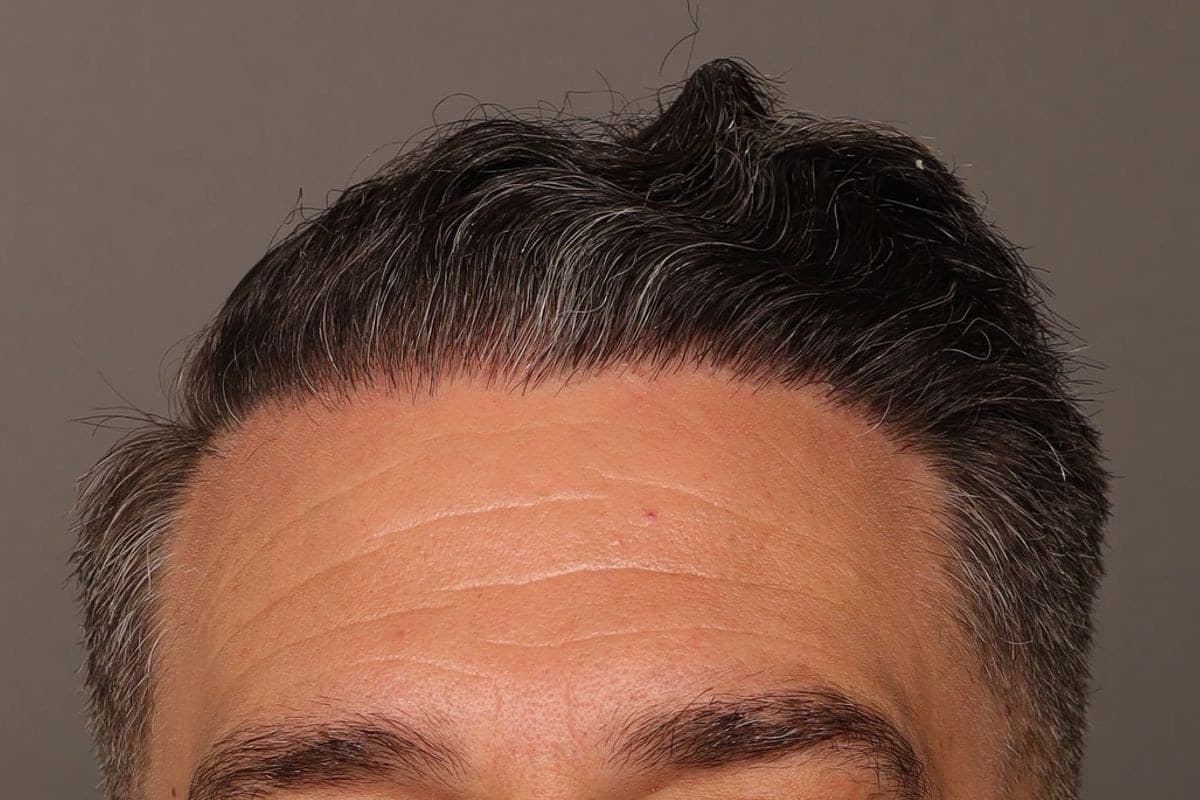
FUE Transplant focused on the frontal scalp and vertex - 2 years post-op
01 / 04
Day 0
Procedure day
Performed awake under local anesthesia. You go home the same day.
Days 7–10
Scabs shed
Tiny scabs at each graft site shed; avoid picking or rubbing the area. Donor scalp heals within one to two weeks.
Weeks 2–6
Expected shedding
Transplanted hairs shed as follicles cycle into a rest phase — expected, not graft failure.
Months 3–4
New growth
New hair growth begins and continues to thicken from here.
8–12 months
Final result
Growth matures fully; the final result is visible.
Facial hair transplant is often combined in a single session with scalp or eyebrow transplantation, under the same local anesthesia, when the donor supply allows.
For patients addressing both a thinning hairline and facial hair, scalp work and beard work can be planned together.
Dr. James Manning is double board-certified by the American Board of Facial Plastic and Reconstructive Surgery and the American Board of Otolaryngology–Head and Neck Surgery. He specializes exclusively in the face.
Facial hair transplant is a procedure where surgeon involvement in every step directly determines the outcome. Dr. Manning creates every recipient site by hand — one at a time, at the acute angles facial hair requires — and performs two to three hair transplant procedures per week, including facial hair cases. Many surgeons delegate this work entirely.
Medically reviewed by Dr. James Manning, MD · July 2026
A facial hair transplant is a surgical procedure that restores the beard, mustache, sideburns, or goatee by moving follicular units from the donor scalp — usually by FUE — and placing each graft individually at a very acute angle to match the natural growth direction of facial hair. It is performed under local anesthesia and is permanent. (Dua K, Verma V, Dua A. Indian J Plast Surg. 2021;54(4):483-488. PMID 34984089)
A full beard typically requires roughly 2,000 to 3,000 grafts; a mustache often runs about 400 to 800; each sideburn or cheek zone usually takes a few hundred. The exact count depends on the area being filled, your existing density, and your goals, and is determined at consultation.
It depends on how the grafts are placed. The most common cause of an unnatural beard or mustache is incorrect graft angle and direction — facial hair lies nearly flat against the skin, so recipient sites are cut at very acute angles, roughly 5 to 15 degrees, and angled to follow the natural flow of the beard. This is the most technically demanding part of the procedure. (Epstein JS. Facial Plast Surg Clin North Am. 2024;32(3):409-416. PMID 38936998)
How much of that work the surgeon personally performs versus delegates is what separates a natural result from an unnatural one. Dr. Manning creates every recipient site himself, one at a time, and stays fully engaged for the full procedure. Many surgeons delegate this work entirely.
Yes. Transplanted facial hair grafts have a high survival rate. In a comparative study, beard-sourced follicular units showed a survival rate of about 95% at one year, with most grafts establishing and growing normally. Careful handling during placement protects survival. (Khan S et al. J Cutan Aesthet Surg. 2019;12(2):112-117. PMID 31413480)
Yes — this is expected. The transplanted hairs typically shed between two and six weeks after surgery as the follicles cycle into a rest phase. The follicles remain intact. New growth begins at three to four months and matures through eight to twelve months. Shedding at this stage does not indicate graft failure.
Yes. The grafts come from the donor scalp, which is genetically resistant to the hormonal changes that cause hair loss, and they keep that resistance after placement. Once established, they grow for life. Because the hair comes from the scalp, it grows long and needs regular trimming or shaving. (Civaş E, Aksoy B, Aksoy HM, et al. J Cosmet Dermatol. 2020;19(7):1606-1612. PMID 32323436)
Because the donor hair keeps its scalp growth characteristics, the transplanted beard and mustache hair grows long and will need regular trimming or shaving to maintain the length you want — a permanent part of the routine after a facial hair transplant. A second session is sometimes appropriate later, to add density in a zone or extend coverage, but the grafts already placed are there to stay.
Yes. Facial hair transplant is a safe and effective way to build a masculine beard pattern. For patients on testosterone, transplantation is typically deferred until at least one year of therapy so the areas that benefit most can be identified, and any planned facial masculinization surgery should be discussed beforehand because it can shift the position of transplanted hairs. (Ho TV et al. Aesthet Surg J. 2021;41(7):NP863-NP870. PMID 33565575)
The procedure is performed awake under local anesthesia and patients go home the same day. Small scabs shed over the first seven to ten days, and the donor scalp heals within one to two weeks. Most patients return to desk work within a few days, while strenuous activity and direct sun on the face are limited for two to three weeks.
If you are considering a facial hair transplant, we’d love to see you in consultation to determine if facial hair transplant is the right fit for your anatomy and goals.
Inquire About Consultations801·317·8687


