Facial plastic surgery in Salt Lake City, Utah
Insights, timelines, details, and more.
Request a ConsultationNon-surgical hair restoration is the medical management of hair loss without surgery. It treats androgenetic alopecia — pattern hair loss driven by DHT (dihydrotestosterone), the hormone that causes hair follicles to shrink over time — using medications such as finasteride, dutasteride, minoxidil, and spironolactone, sometimes alongside PRP, while correcting thyroid and vitamin contributors that worsen shedding. Dr. James Manning performs the procedure in Salt Lake City, Utah.
Most pattern hair loss is driven by DHT — the hormone that causes genetically susceptible follicles to shrink with each growth cycle until they stop producing visible hair. The medical approach works along a few separate mechanisms at once.
Finasteride and dutasteride block the enzyme that converts testosterone into DHT, lowering DHT at the follicle. Lowering DHT helps slow or even reverse hair loss. Minoxidil works differently — it does not touch DHT, but extends the active growth phase of the follicle and improves blood flow to the scalp. Spironolactone is an anti-androgen used in women; it blocks androgen activity at the follicle and is the common option where finasteride is not appropriate. PRP — platelet-rich plasma drawn from your own blood and injected into the scalp — is used as an adjunct, with mixed but improving evidence.
Underneath all of it, we identify and correct thyroid dysfunction and vitamin deficiencies — iron, vitamin D, and others — that are common, overlooked contributors to shedding.
Good candidates have androgenetic alopecia — pattern loss — that is early or actively progressing, where slowing or reversing the process is realistic. The earlier loss is addressed, the more native hair there is to protect.
Both men and women are candidates. Men typically start with a DHT-blocker and minoxidil. Women are managed with minoxidil and, where appropriate, spironolactone — finasteride is generally avoided in women who are or may become pregnant. Patterns that are not yet stable are managed medically before any decision about surgery, and medical treatment is the standard maintenance plan after a hair transplant, protecting the native hair surgery cannot address.
Scarring (cicatricial) alopecia — where the follicle is permanently destroyed and replaced by scar — does not respond to these medications and is ruled out first.
Each option works on a different mechanism. The honest summary is that the oral DHT-blockers and minoxidil carry the strongest evidence; PRP is promising but less established. We steel-man each, then state a preference.
| Option | Mechanism | Who it’s for |
|---|---|---|
| Finasteride (oral) | Blocks ~70% of DHT conversion | Men with pattern loss |
| Dutasteride (oral) | Blocks DHT more completely than finasteride | Men seeking more DHT suppression |
| Topical finasteride | Lowers scalp DHT with less systemic exposure | Men concerned about systemic side effects |
| Minoxidil (topical or oral) | Extends growth phase; not a DHT blocker | Men and women; pairs with a DHT-blocker |
| Spironolactone (oral) | Anti-androgen; blocks androgen at the follicle | Women, where finasteride is not appropriate |
| PRP | Injected growth factors from your own blood | Adjunct to medication, not a replacement |
The preference, stated plainly. For most men, a DHT-blocker plus minoxidil is the foundation — that combination has the best data. For most women, minoxidil with spironolactone where appropriate. PRP is an add-on, not a substitute for the medications that actually move the numbers.
The medications work. The most important thing is understanding the actual data, rather than relying only on anecdotes or internet discussions:
Dr. Manning builds the plan around mechanism and evidence, not a single product. That means identifying which drivers are actually at work — DHT, androgen activity in women, thyroid, nutrition — and matching treatment to each, rather than handing every patient the same prescription.
It also means presenting risk honestly, in absolute numbers, so the decision is yours to make with real information. We educate. We offer solutions. We show possibilities.
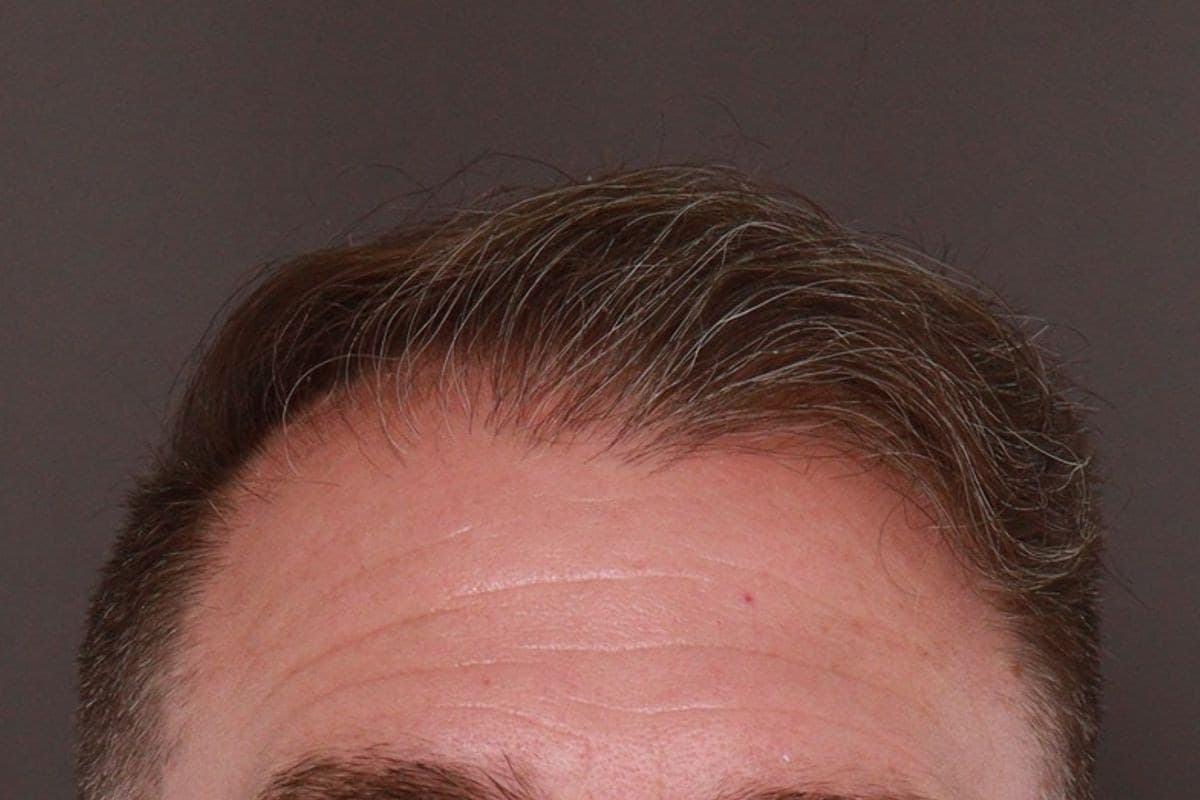
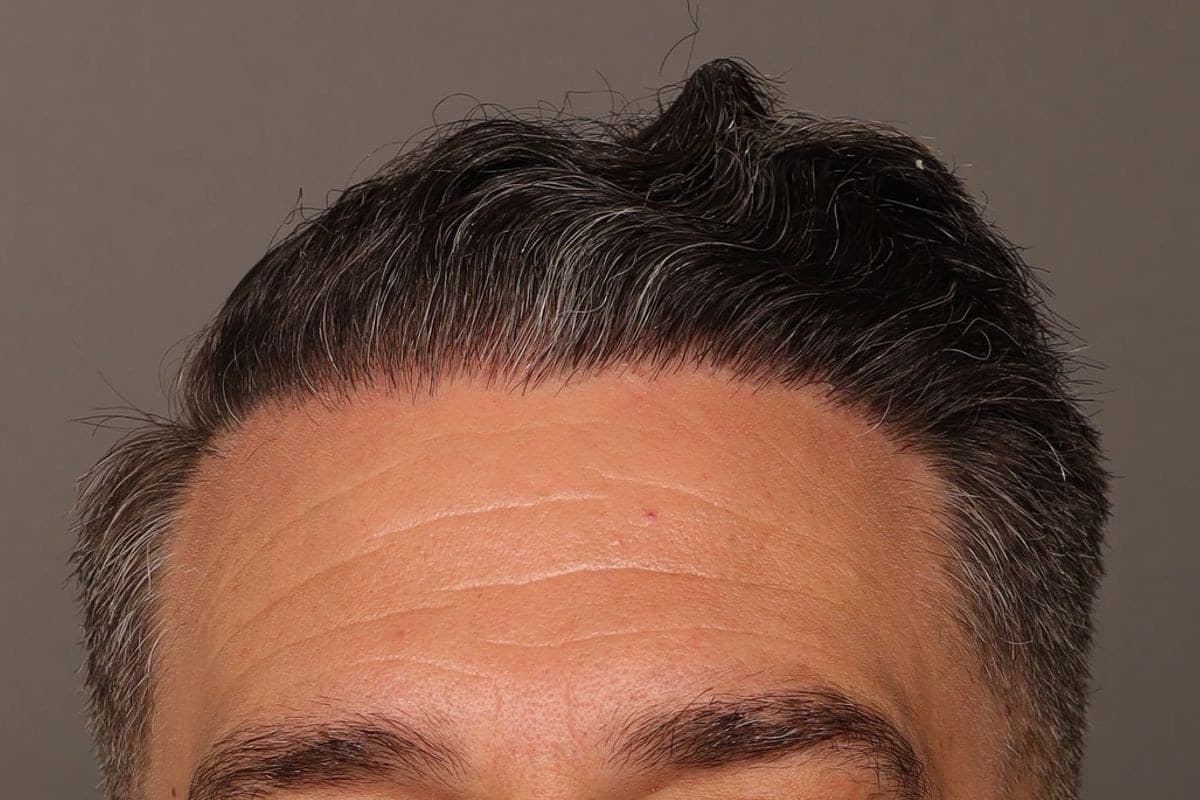
FUE Transplant focused on the frontal scalp and vertex - 2 years post-op
01 / 04
Day 0
Plan begins
Medications and, where appropriate, PRP start the same day as your consultation, built around your labs and goals.
Weeks 2–8
Early shed
A temporary shedding phase is common with minoxidil as resting follicles release ahead of new growth — expected, not a sign of failure.
Months 3–6
Loss stabilizes
The first measurable win: shedding slows and stabilizes. Visible regrowth follows from here.
~12 months
Fuller effect
The fuller effect of the plan is typically visible by around a year, as the hair cycle completes its turnover.
Ongoing
Daily maintenance
Benefits last only as long as treatment continues. Stopping typically reverses the gains over the following 6 to 12 months.
Non-surgical hair restoration is the maintenance layer that protects your native hair, and it pairs directly with the surgical options.
A hair transplant addresses hair that is already gone; medical treatment protects the native hair a transplant cannot address, and is the standard maintenance plan afterward. Hairline lowering — also called forehead reduction — is for patients changing the frame of the face. An eyebrow transplant restores brow density where it has thinned.
Dr. James Manning is double board-certified by the American Board of Facial Plastic and Reconstructive Surgery and the American Board of Otolaryngology–Head and Neck Surgery. He specializes exclusively in the face. Because he performs hair transplants two to three times a week, he sees the full arc of hair loss — from the first thinning that medication can slow, to established loss that needs surgery — and builds the medical plan with that whole picture in view.
Medically reviewed by Dr. James Manning, MD · July 2026
It can, but the absolute numbers are smaller than most people assume. Across fifteen randomized, placebo-controlled trials covering 4,495 men, roughly 5 men out of 100 reported sexual side effects on finasteride, compared with about 3 out of 100 on placebo — roughly 2 additional cases per 100 men. Most cases resolve, either on the medication or after stopping.
Dutasteride blocks DHT more completely and, in randomized comparisons, produced modestly higher hair counts than finasteride at 24 weeks. The trade-off is that dutasteride has fewer long-term safety data. For many men finasteride remains the first step; dutasteride is an option when more DHT suppression is the goal.
Yes. In randomized trials, 5% topical minoxidil reliably increases hair counts. A head-to-head randomized trial found daily oral minoxidil and twice-daily topical minoxidil performed similarly over 24 weeks, so the choice often comes down to tolerance and preference rather than one being clearly stronger.
For minoxidil, a randomized trial showed oral and topical performed similarly at 24 weeks; oral is convenient, topical keeps the drug more local. Topical finasteride lowers scalp DHT with less drug reaching the bloodstream than the oral form. The right route depends on your goals and how you tolerate each.
In a systematic review of female pattern hair loss, about 57% of women improved on oral spironolactone overall, and roughly 66% improved when it was combined with another treatment such as minoxidil. It is the common option for women where finasteride is not appropriate.
The evidence is mixed but improving. A 2025 meta-analysis of 43 randomized trials and 1,877 participants found moderate-quality evidence that PRP improves hair density and reduces hair loss, though it did not significantly improve hair thickness. We use it as an adjunct to medication, not a replacement for it.
Plan on 3 to 6 months before visible change and closer to 12 months for the fuller effect, because these medications work on the hair cycle. The first win is usually that loss slows and stabilizes; visible regrowth follows.
The benefits last as long as you stay on treatment. These medications manage an ongoing process; they do not cure it. Stopping reverses the gains — typically over the following 6 to 12 months the hair returns to the trajectory it would have been on without treatment, sometimes faster. That is not a flaw in the medication; it is what “managing a progressive condition” means.
For loss that is already established — where the follicle is gone, not just shrinking — medication cannot rebuild what is no longer there. That is where a hair transplant becomes the conversation, with medical treatment continuing afterward to protect the native hair around the grafts.
Possibly. An early shedding phase, typically around 2 to 8 weeks in, is common as resting follicles are released ahead of new growth. It is expected and temporary, not a sign the medication is failing.
No. The benefits last only while you stay on treatment. Stopping typically reverses the gains over the following 6 to 12 months, because the medication manages an ongoing process rather than curing it.
For early or progressing loss, often yes — medication can slow or reverse thinning while the follicle is still alive. For established loss, where the follicle is gone, medication cannot rebuild it, and a hair transplant becomes the option, with medical treatment continuing afterward as maintenance.
Your $150 consultation includes a complete evaluation of your scalp, hormonal and nutritional contributors, and goals. From there, we build a plan specific to you, and you'll leave with a fully transparent quote detailing every cost. The consultation fee is applied toward any surgery, treatment, or product.
If you are noticing thinning and want to understand which contributors are actually at work — and what the data says each treatment can and cannot do — we would love to see you in consultation to determine if non-surgical hair restoration is the right fit for your needs.
Inquire About Consultations801·317·8687


