Facial plastic surgery in Salt Lake City, Utah
Insights, timelines, details, and more.
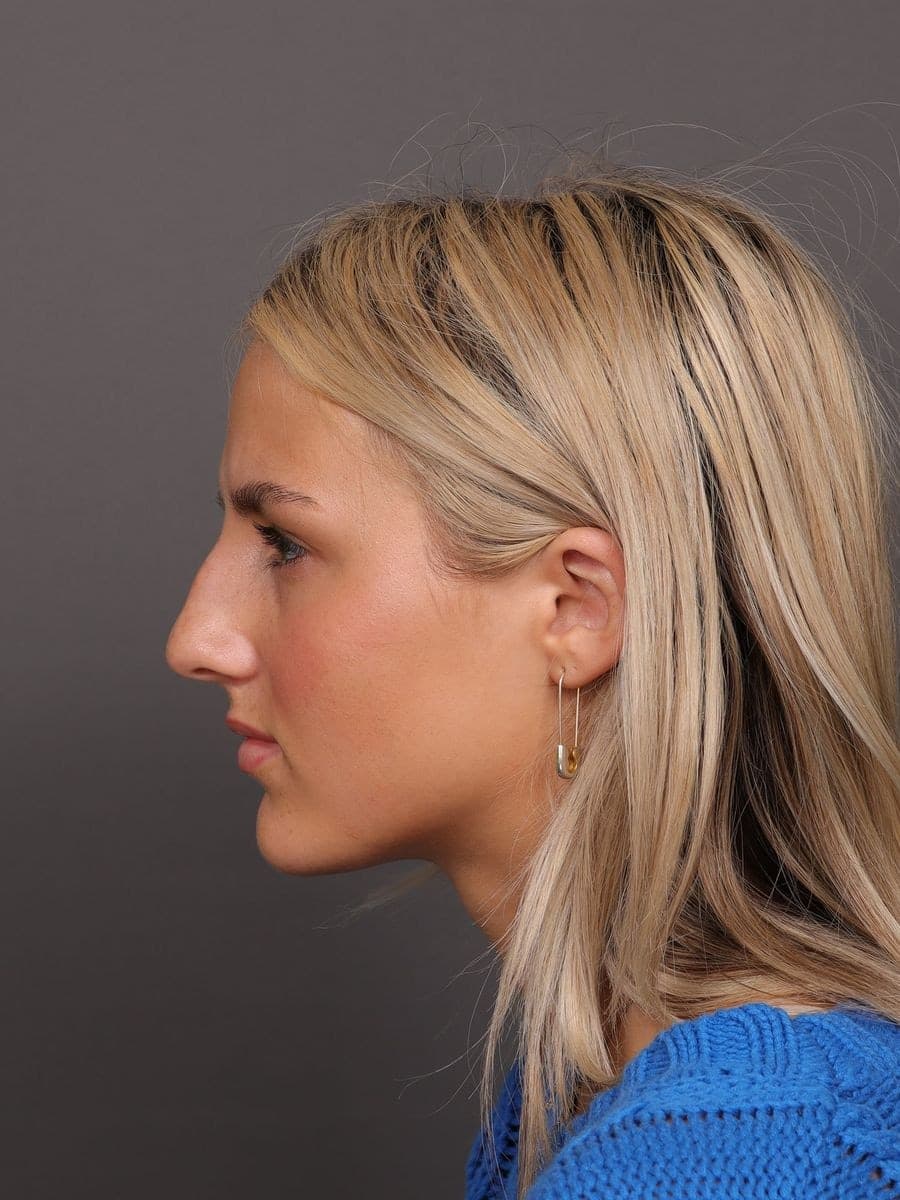
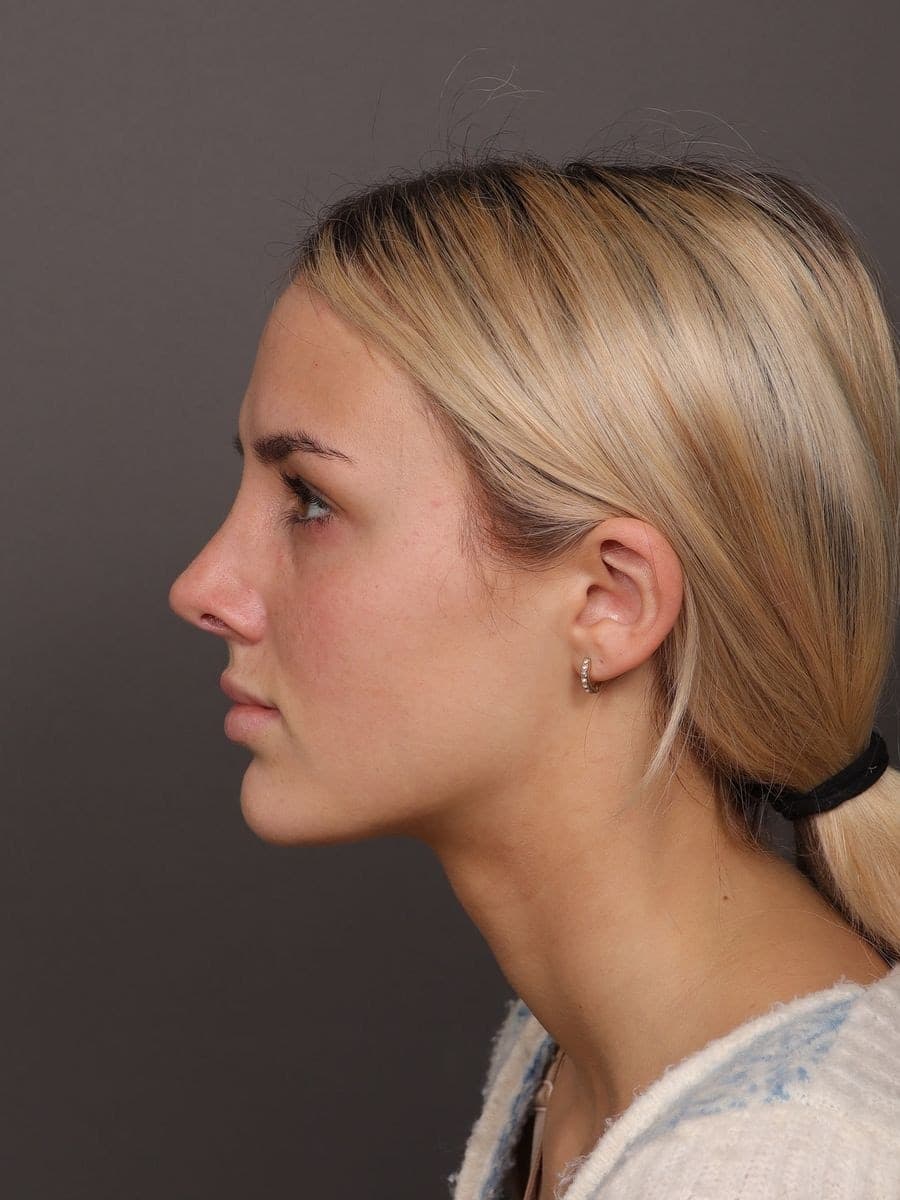
Request a ConsultationA bump shave — clinically, a dorsal hump reduction — is a targeted procedure that lowers a bump on the bridge of the nose by reducing the excess bone and cartilage that form it. The dorsum — the bridge of the nose — is brought down to a smooth profile line. It is often a more limited-scope procedure than a full rhinoplasty, and when the anatomy allows it is performed closed, through incisions inside the nostrils, with no external scar. Dr. James Manning performs the procedure in Salt Lake City, Utah.
A dorsal hump is made of two materials: bone toward the top of the bridge and cartilage lower down. A bump shave reduces both, lowering the dorsum until the profile reads as a straight or gently curved line rather than a bump. The bone is lowered by rasping or with a fine instrument; the cartilage is trimmed to match.
There is one step that matters here, and it is the reason a “shave” is rarely just a shave. When a sizable hump is taken down, the nasal bones — which used to meet at a peak — are left with a flat gap across the top. That gap is called an open roof: the flat space left on the bridge after a large hump is removed. To close it, the bones are brought back together with osteotomies — controlled cuts in the nasal bone that let the bones be moved inward to rebuild a narrow, smooth bridge.
How much is lowered, and whether osteotomies are needed, is specific to your profile — not a fixed amount applied to every nose.
The clearest candidate for a bump shave is a patient whose main or only concern is a bump on the bridge seen in profile — with a tip and base that are already balanced and a nose that otherwise sits well with the rest of the face.
Candidates should be in good general health and have a fully developed nose — typically by the mid-teens for female patients and slightly later for male patients. Breathing should be assessed too: if a hump comes with a deviated bridge or a history of nasal obstruction, that belongs in the plan.
A shave alone is appropriate when the hump stands on its own. When it is bound up with the tip, the base, or significant deviation, the bump shave becomes one part of a larger rhinoplasty rather than a standalone procedure. That distinction is the whole conversation at consultation.
The difference between a bump shave and a full rhinoplasty is scope. A bump shave addresses one thing — the hump on profile — and leaves the rest of the nose alone. A full rhinoplasty reshapes the bridge, tip, nostrils, and overall proportion together. The right choice depends on what actually needs to change.
| Bump Shave | Full Rhinoplasty | |
|---|---|---|
| What it addresses | A bump on the bridge, on profile. | Bridge, tip, nostrils, overall proportion. |
| Scope | Focused, often isolated. | Comprehensive reshaping. |
| Tip work | None, or minimal. | Often included. |
| Osteotomies | Sometimes — to close an open roof. | Frequently. |
| Approach | Closed when anatomy allows. | Open or closed. |
| Best for | A profile bump with a balanced tip and base. | Multiple concerns, or a bump tied to tip and base proportion. |
The most common fear patients bring to a profile consultation is the scooped, over-done nose. For most, a bump shave is designed to avoid it:
The signature of how Dr. Manning approaches a bump shave is restraint. Rather than aggressively over-resecting the bridge and rebuilding from there, the dorsum is lowered conservatively — taking down only what the profile requires and preserving the native structure underneath wherever possible.
A systematic review and meta-analysis of 753 patients found that dorsal preservation produced significantly greater cosmetic satisfaction than conventional hump reduction in the early postoperative period. (Aesthetic Plast Surg. 2025; PMID 40195129)
In practice, preservation-minded lowering means the result follows the line of your own profile rather than a default straight edge dropped onto every nose. The amount is specific to the patient — that is the anti-template principle at the center of this page.
Day 0
Surgery day
The dorsum is lowered and, if a larger hump is reduced, osteotomies close the open roof.
Week 1
Cast on
A small cast protects the bridge while the initial swelling settles.
Weeks 1–2
Bruising resolves
When osteotomies are part of the procedure, bruising and swelling around the eyes resolve on their own.
Weeks 2–3
Comfortable in public
Most patients feel comfortable being seen by this point, with the profile largely settled.
Months
Profile refines
The bridge continues to refine over several months as the last swelling resolves. Patience is part of the process.
A bump shave is commonly combined with a chin implant. The nose and chin define the profile together — adding chin projection can balance the profile and make the bridge reduction read as more proportionate without taking the nose down further.
Alar base reduction — narrowing the base of the nostrils through small excisions at the alar crease — is occasionally performed alongside a bump shave when the nostrils are wide relative to the rest of the nose. It is a separate maneuver, indicated only when the anatomy calls for it.
When the hump is part of a broader set of concerns, the conversation moves toward full rhinoplasty, preservation rhinoplasty, or — for a prior result — revision rhinoplasty.
Dr. James Manning is double board-certified by the American Board of Facial Plastic and Reconstructive Surgery and the American Board of Otolaryngology–Head and Neck Surgery. He specializes exclusively in the face. Profile and dorsal work is a central part of his practice — he favors preservation-minded lowering that follows the patient’s own profile line rather than aggressive over-resection, with a closed approach whenever the anatomy allows.
Medically reviewed by Dr. James Manning, MD · July 2026
A bump shave is a dorsal hump reduction — a procedure that lowers a bump on the bridge of the nose by reducing the excess bone and cartilage that form it, bringing the profile down to a smooth line. It is often a more limited-scope procedure than a full rhinoplasty and is frequently done through a closed approach with no external scar.
Sometimes. A small hump can be lowered without osteotomies — the controlled cuts that let the nasal bones be moved. But taking down a larger hump leaves an open roof — a flat gap across the top of the bridge — and closing it usually requires osteotomies to bring the bones back together. A literature review on open-roof deformity describes lateral osteotomies and grafts as the standard ways to close that gap and prevent a flat, wide bridge. (Ear Nose Throat J. 2024; PMID 39319859)
An open roof is the flat gap left on top of the bridge after a large hump is removed — the nasal bones, which used to meet at a peak, are left separated. It is closed with osteotomies that bring the bones back together into a narrow, smooth bridge, or in smaller cases with cartilage replaced on the dorsum.
That is the most common fear, and the goal is the opposite. The amount lowered is measured against your own profile rather than a template — enough to take down the bump, not so much that the bridge scoops. When it is right, the profile looks straight and still looks like yours.
A bump shave addresses one thing — the bump on profile — and leaves the rest of the nose alone. A full rhinoplasty reshapes the bridge, tip, nostrils, and overall proportion together. A shave is the right operation when the hump is the only concern; when it is tied to the tip or base, it becomes part of a larger plan.
Most patients wear a small cast over the bridge for the first week. When osteotomies are part of the procedure, bruising and swelling around the eyes resolve within one to two weeks; with a more limited reduction, bruising is milder. Most patients are comfortable in public by two to three weeks, and the bridge continues to refine over several months.
The profile settles faster than a full rhinoplasty because less of the nose is disturbed — but the bridge still refines over several months as the last swelling resolves. The result at one month is close, not final.
Patience is part of the process.
No — the reduction is a permanent structural change, and once the bone and cartilage heal, the bump does not return. One caveat: preservation techniques, which keep more native structure, carry a small risk of a hump partially recurring compared with cutting it away. A meta-analysis of 753 patients found preservation produced greater early cosmetic satisfaction, with that trade-off noted as part of the discussion. (Aesthetic Plast Surg. 2025; PMID 40195129)
Not always. Lowering a large hump can leave an open roof that needs osteotomies, and reducing the bridge without accounting for the tip can leave a polly beak — fullness above the tip. A review of pollybeak cases listed over-resection of the bony dorsum among the causes. (Eur Rev Med Pharmacol Sci. 2024; PMID 38639509) Whether a shave alone is enough is decided at consultation, before surgery.
The cost varies from patient to patient, depending on the extent of the procedure and whether it is combined with other treatments. A $150 consultation includes a complete evaluation, and you leave with a fully transparent quote detailing every cost — surgeon's fee, facility fee, and anesthesia fee. The consultation fee is applied toward any surgery, treatment, or product.
If you would like to discuss the bump on your profile, we would love to see you in consultation to determine whether a bump shave would best fit your needs.
Inquire About Consultations801·317·8687