Facial plastic surgery in Salt Lake City, Utah
Insights, timelines, details, and more.
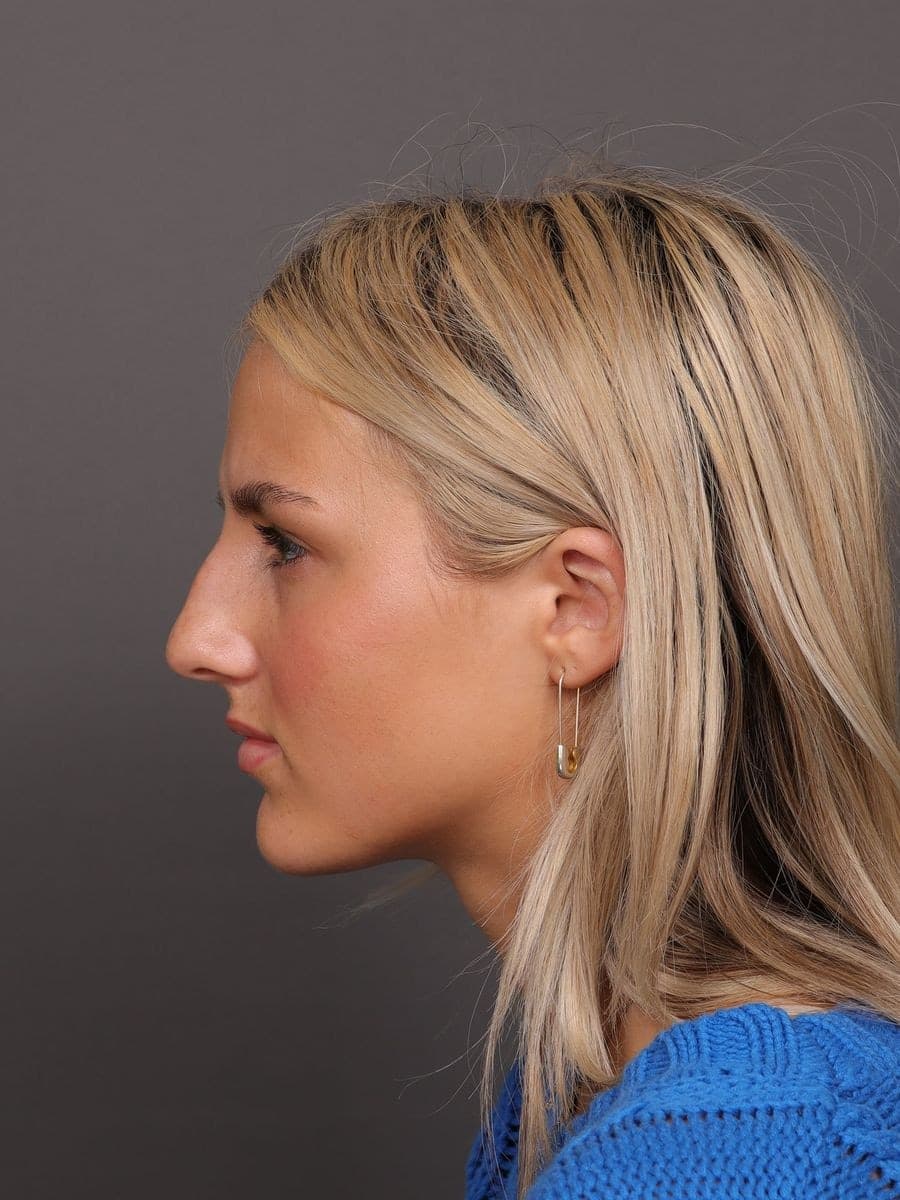
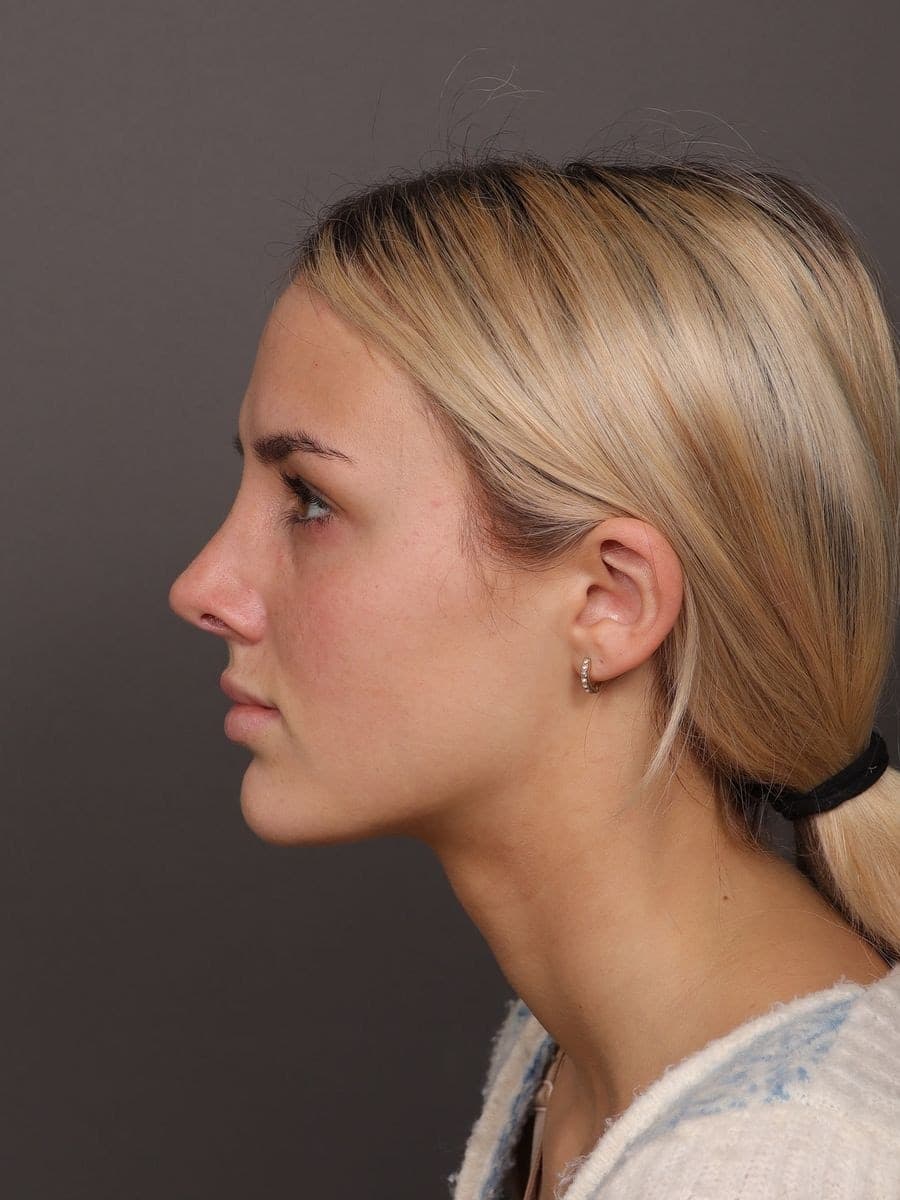
Request a ConsultationRevision rhinoplasty — also called secondary rhinoplasty — is a surgical procedure that corrects or refines the result of a previous rhinoplasty. It addresses both appearance and function: a nose that healed asymmetrically, lost support, or now obstructs breathing after the first operation. Because the first surgery left scar tissue and altered the underlying bone and cartilage, revision is among the most technically demanding operations in facial plastic surgery, and it often requires rebuilding structure with cartilage grafts. Dr. James Manning performs the procedure in Salt Lake City, Utah.
Revision rhinoplasty works by re-entering a nose that has already been operated on, releasing scar tissue, and rebuilding the structural framework — the bone and cartilage that hold the nose’s shape and keep the airway open. The specific maneuvers depend entirely on what the first surgery did, what it removed, and how the nose healed.
The recurring problem in revision is missing support. Cartilage that was removed or weakened during the first operation often has to be replaced, so the surgery usually involves grafting. Grafts are taken from the patient’s own body — the septum (the wall of cartilage between the nostrils), the ear (auricular cartilage), or a rib (costal cartilage — cartilage taken from the rib, used when more material is needed than the septum or ear can supply). When the septum was already harvested in the first surgery, the ear or rib becomes the source.
Most revisions use an open approach — a small incision on the columella, the strip of tissue between the nostrils — because scarred, distorted anatomy has to be seen directly to be corrected accurately. The plan follows the patient’s altered anatomy, not a template.
Good candidates fall into two groups, and many belong to both. The first are patients unhappy with the appearance after a prior rhinoplasty — a bridge that is still too high or now too low, a tip that is pinched or droops, asymmetry, or a result that simply does not fit the face. The second are patients with a functional problem after surgery — difficulty breathing through the nose, often from collapsed nasal valves or lost internal support.
Two conditions matter more in revision than in any primary case. The first is timing: the nose should be fully healed before it is revised, which typically means waiting about 12 months after the previous surgery. Operating into a nose that is still swollen and settling risks correcting a problem that would have resolved on its own. The second is expectation. A revised nose has less native cartilage and more scar tissue to work with than it started with, so the goal is meaningful improvement, not a guaranteed return to a pre-surgical ideal.
If you are at least a year out, fully healed, and clear about what bothers you, you are likely a candidate to be evaluated.
A primary rhinoplasty works on a nose with normal, undisturbed anatomy. A revision works on a nose that has already been cut, healed, and scarred. That single difference changes everything about the operation.
| Primary | Revision | |
|---|---|---|
| Anatomy | Native, undisturbed. | Scarred and distorted by prior surgery. |
| Cartilage available | Usually intact. | Often depleted or already removed. |
| Grafting | Sometimes. | Frequently required, often from ear or rib. |
| Approach | Open or closed. | Usually open, for direct visibility. |
| Healing | More predictable. | Longer, less predictable. |
| Timing | When the nose is fully developed. | About 12 months after the prior surgery. |
Patients who come in for revision arrive with a specific fear that primary patients do not carry: they have already had one disappointing result. The trust that surgery would improve things has been tested. That is a reasonable place to be guarded.
The hardest part of revision is rebuilding support, and that depends on the grafts. Dr. Manning sources and shapes the cartilage grafts himself — septal, auricular, or costal — rather than delegating that work. Where the cartilage comes from and how it is carved determines how the nose holds its shape over the years.
The second part is candor. Not every prior result can be fully reversed, and a revision built on an overpromise sets the patient up for a second disappointment. Dr. Manning gives an honest assessment of what is realistically achievable before any plan is made, and he performs revision rhinoplasty regularly rather than occasionally. The assessment, like the plan, follows your anatomy.
Week 1
Cast on
A cast stays over the dorsum of the nose; bruising and swelling are heaviest around the eyes.
Weeks 1–2
Early swelling
Bruising and swelling around the eyes continue. If a rib graft was used, the chest donor site is sore.
Weeks 3–4
Comfortable in public
Most patients are comfortable in public by three to four weeks.
Up to 12+ mos
Tip refines
The tip swells the most and resolves the slowest — in a revision, refinement can continue beyond the twelve months expected of a primary.
1 month →
Patience is the plan
The result at one month is not the final result. With a revision, patience matters even more.
Revision is often as much a functional operation as an aesthetic one, so it commonly includes work on the airway. Septoplasty — straightening the septum, the wall of cartilage and bone between the nostrils — is frequently performed alongside a revision when a deviation contributes to obstruction, and the septum may also supply graft cartilage if it was not already harvested.
Alar base reduction — narrowing the base of the nostrils through small excisions at the alar crease — is sometimes added when the nostrils are wide relative to the rest of the nose. As in any nose surgery, it is only indicated when the anatomy calls for it.
Dr. James Manning is double board-certified by the American Board of Facial Plastic and Reconstructive Surgery and the American Board of Otolaryngology–Head and Neck Surgery. He specializes exclusively in the face.
Revision rhinoplasty is among the most technically demanding operations in facial surgery, and it is a regular part of his practice — he sources and shapes the cartilage grafts himself and gives each patient an honest assessment of what a revision can realistically achieve.
Medically reviewed by Dr. James Manning, MD · July 2026
Most surgeons recommend waiting about 12 months after the previous rhinoplasty before revising. The nose stays swollen and continues to settle for the first year, so operating earlier risks correcting a problem that would have resolved on its own. Timing is decided jointly with your surgeon after the nose has fully healed.
The first operation leaves scar tissue, distorts the normal anatomy, and often removes or weakens cartilage. A surgeon working on a revision has fewer landmarks, less native cartilage to work with, and a reduced blood supply to the skin, all of which make healing longer and less predictable. In a single-surgeon series of primary and revision rhinoplasties, patient satisfaction after revision was high, but revision is still recognized as the more demanding procedure. (Suresh et al. Plast Reconstr Surg Glob Open. 2021; PMID 34522571)
Often, yes. Revision frequently requires rebuilding support that the first surgery removed or weakened, and that is done with the patient's own cartilage — from the septum, the ear, or a rib. When the septum was already used in the first operation, the ear or rib becomes the source. Whether grafting is needed depends on your specific anatomy and is determined at consultation.
Three sources are used: the septum (the wall between the nostrils), the ear (auricular cartilage), and the rib (costal cartilage). The rib is used when a larger amount of structural cartilage is needed than the septum or ear can supply. Studies of revision rhinoplasty using the patient's own rib cartilage report high patient satisfaction and durable structural support. (Calvert et al. Plast Reconstr Surg. 2014; PMID 24776545)
Most revisions are performed open — through a small incision on the columella, the strip of tissue between the nostrils — because scarred and distorted anatomy has to be seen directly to be corrected and grafted accurately. The closed approach offers less visibility, which is a real disadvantage when the landmarks have already been altered.
Yes. Difficulty breathing after a rhinoplasty is often caused by collapsed nasal valves, lost internal support, or a deviated septum — all of which can be addressed during a revision, frequently by adding cartilage grafts to reopen and support the airway. Functional and aesthetic goals are planned together.
Outcomes are generally good in experienced hands, though revision is less predictable than a primary. Studies using the patient's own cartilage grafts in secondary rhinoplasty report high rates of patient satisfaction, with only a small percentage of cases needing further correction. (Manafi et al. World J Plast Surg. 2017; PMID 28713702) Because every revised nose starts from a different prior result, your realistic outlook is best discussed at a thorough consultation.
There is no fixed number, but each operation adds scar tissue and uses cartilage, so the available material and the predictability of healing decrease with each procedure. This is one reason a measured, well-planned revision — rather than a series of small ones — is the goal, and why an honest assessment of what is achievable comes before any plan.
Revision rhinoplasty produces lasting structural changes. Once the bone, cartilage, and any grafts have healed and integrated, the corrected shape and rebuilt support are stable.
The nose continues to age naturally over time — skin quality and soft tissue change gradually for everyone — but the structural correction made in surgery remains. Cartilage grafts taken from the patient’s own body are living tissue and are there to stay.
If you are unhappy with a prior nose surgery or are having trouble breathing since your last operation, we would love to see you in consultation to determine whether a revision rhinoplasty would best fit your needs.
Inquire About Consultations801·317·8687