Facial plastic surgery in Salt Lake City, Utah
Insights, timelines, details, and more.
Request a ConsultationLower blepharoplasty is a surgical procedure that addresses under-eye bags, tear-trough hollowing, and excess lower-lid skin. Most often it is performed transconjunctivally — through an incision on the inside of the eyelid, leaving no external scar — and the orbital fat that causes the bag is repositioned or preserved rather than simply removed. It is performed under local anesthesia.
The bag under the eye is rarely just extra skin. In most patients it is orbital fat — the fat that cushions the eye — pushing forward against a weakening barrier as the lower lid ages. The hollow just below it, the tear trough, is the same problem seen from the other side: fat has bulged above a fixed groove, and the contrast reads as a tired, shadowed eye.
A transconjunctival lower blepharoplasty — an incision placed on the inside of the lower lid rather than the skin — reaches that fat directly. From there the fat is either conservatively reduced or, more often, released and repositioned downward to fill the tear trough, so the bulge above and the hollow below are corrected in one move. The incision is hidden inside the lid and requires no sutures on the skin.
The goal is a smooth transition from lid to cheek, not an empty one. Dr. James Manning performs the procedure in Salt Lake City, Utah.
Good candidates for lower blepharoplasty are patients bothered by under-eye bags, persistent tear-trough hollows, or a tired, shadowed look beneath the eyes that does not change with rest. Many are in their late thirties through their sixties, though the bag is partly inherited and can appear earlier.
The lower lid is assessed for tone before surgery. A lid that is already lax — that snaps back slowly when pulled away from the eye — may need its support tightened at the same time to keep the lid in position afterward. Skin quality, the depth of the tear trough, and the amount of fat are all evaluated at consultation, and the plan follows what the anatomy shows.
Patients with significant medical eye conditions, severe dry eye, or unrealistic expectations are not always candidates, and that is discussed honestly at the visit.
For decades the standard move was to remove the herniated fat — the fat that has pushed past its normal position. It is fast and it flattens the bag. The problem shows up years later: an under-eye that has been emptied of fat can look hollow and skeletonized, and that hollow is harder to correct than the original bag. Over-removal is one of the more common reasons patients seek revision.
| Fat Repositioning | Fat Removal Alone | |
|---|---|---|
| What happens to the fat | Released and set into the tear-trough hollow, using the patient’s own tissue to rebuild a smooth contour. | Discarded outright, which flattens the bag quickly. |
| Best suited to | Most anatomy, wherever fat is available to reposition into the trough. | Rare cases with true excess fat and no tear-trough hollow to fill. |
| Anesthesia | Local. | Local. |
| The result | A smooth lid-to-cheek transition, without the hollow that over-removal can leave behind. | Can look hollow and skeletonized years later — a common revision cause. |
The fear most patients bring in is not the bag. It is the result they have seen on other people — an under-eye that has been hollowed out, a lower lid pulled down and rounded, a look that reads as operated:
A modest tear trough can sometimes be softened with filler — hyaluronic acid placed in the hollow to blunt the shadow — without surgery. For the right patient that is a reasonable first step, and Dr. Manning will say so. It is temporary, it does nothing for the fat that creates the bag above the trough, and overfilling a thin lower lid can leave its own puffiness and discoloration.
Surgery becomes the right tool when the bag itself is the problem — when there is true herniated fat, when the hollow is deep, or when filler has been tried and the contour still reads as tired. Lower blepharoplasty addresses the cause rather than camouflaging it.
The right answer depends on the anatomy, and that is what the consultation is for.
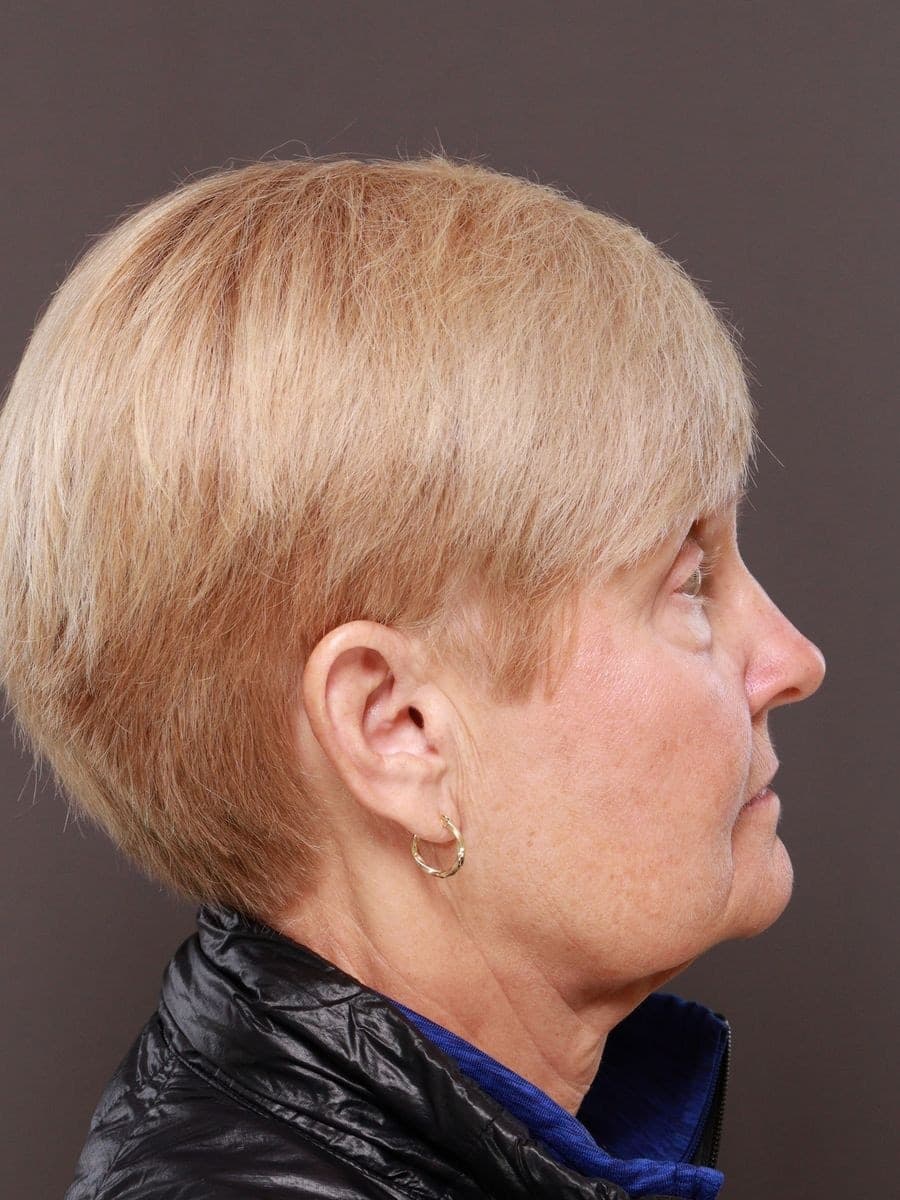
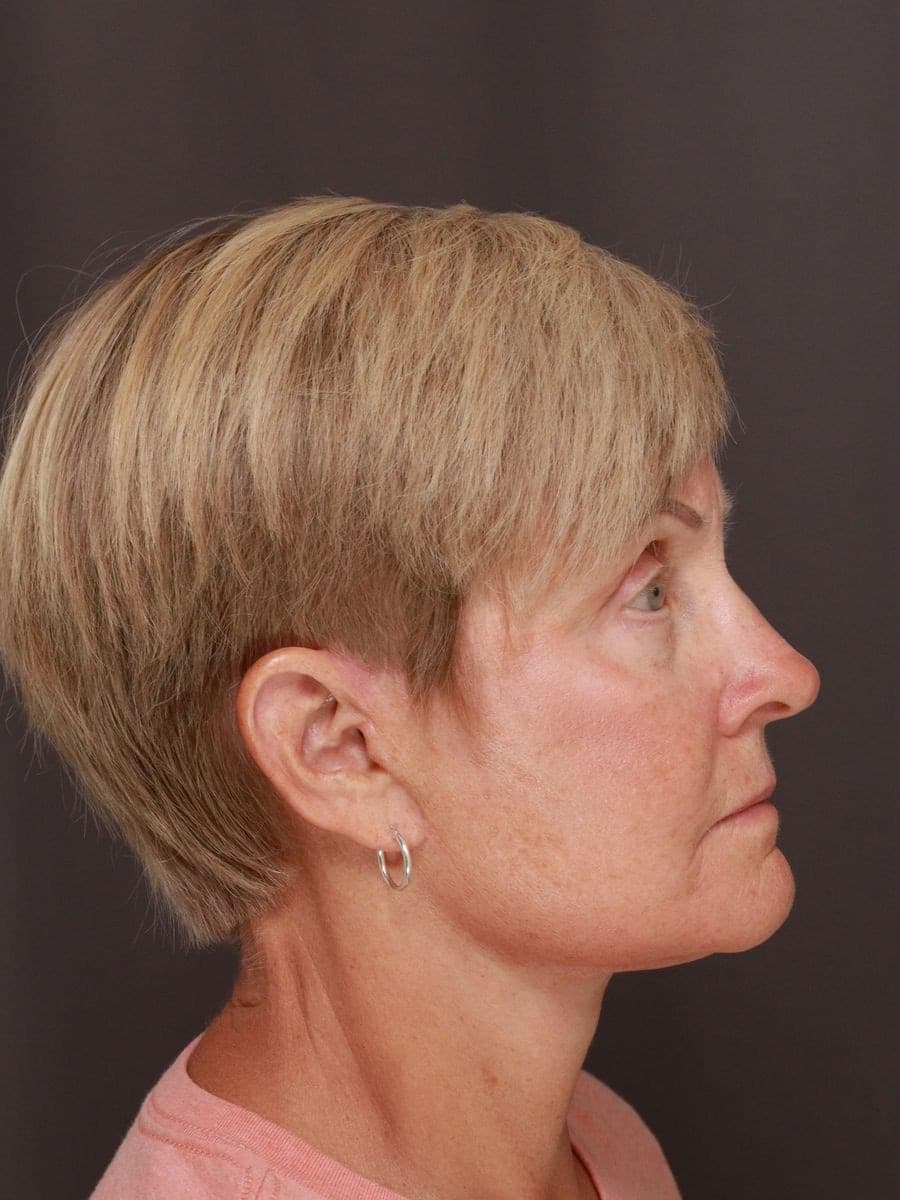
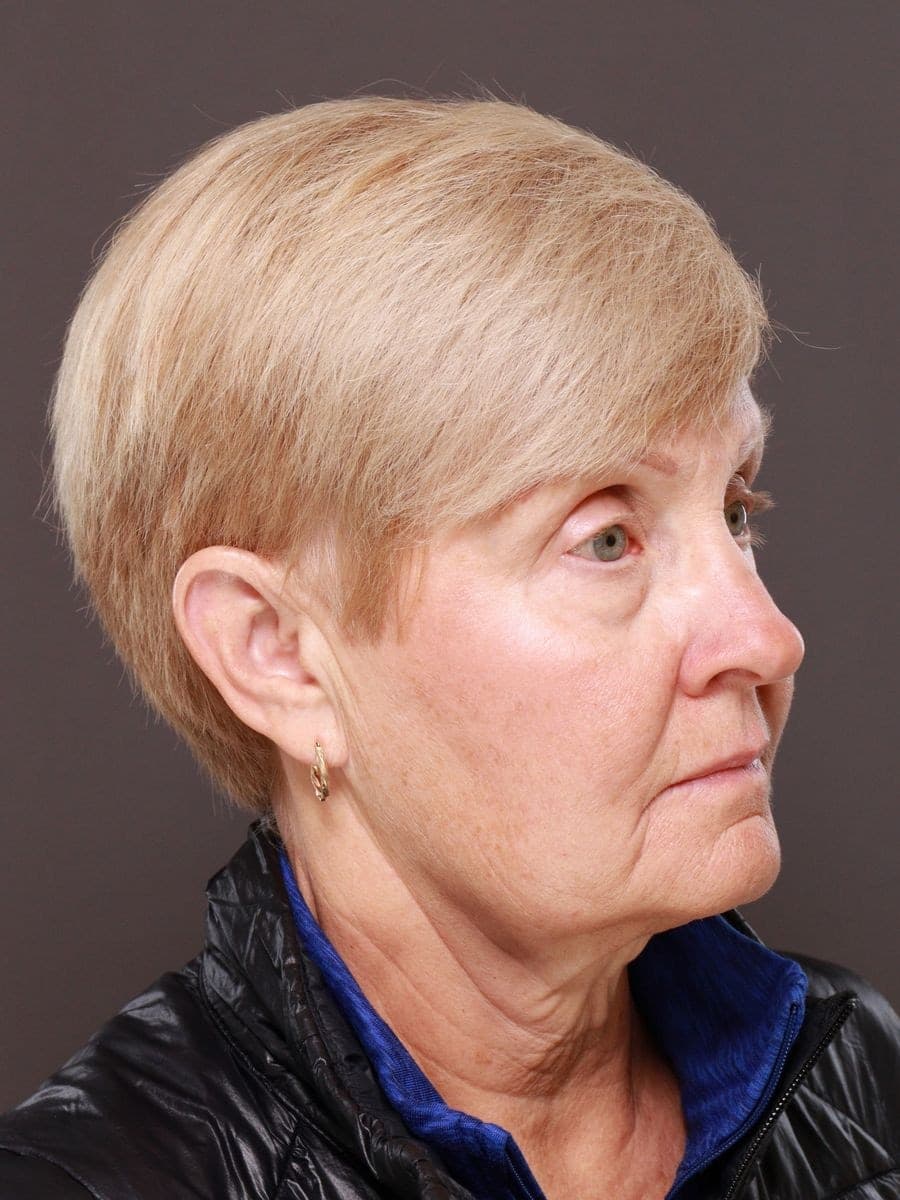
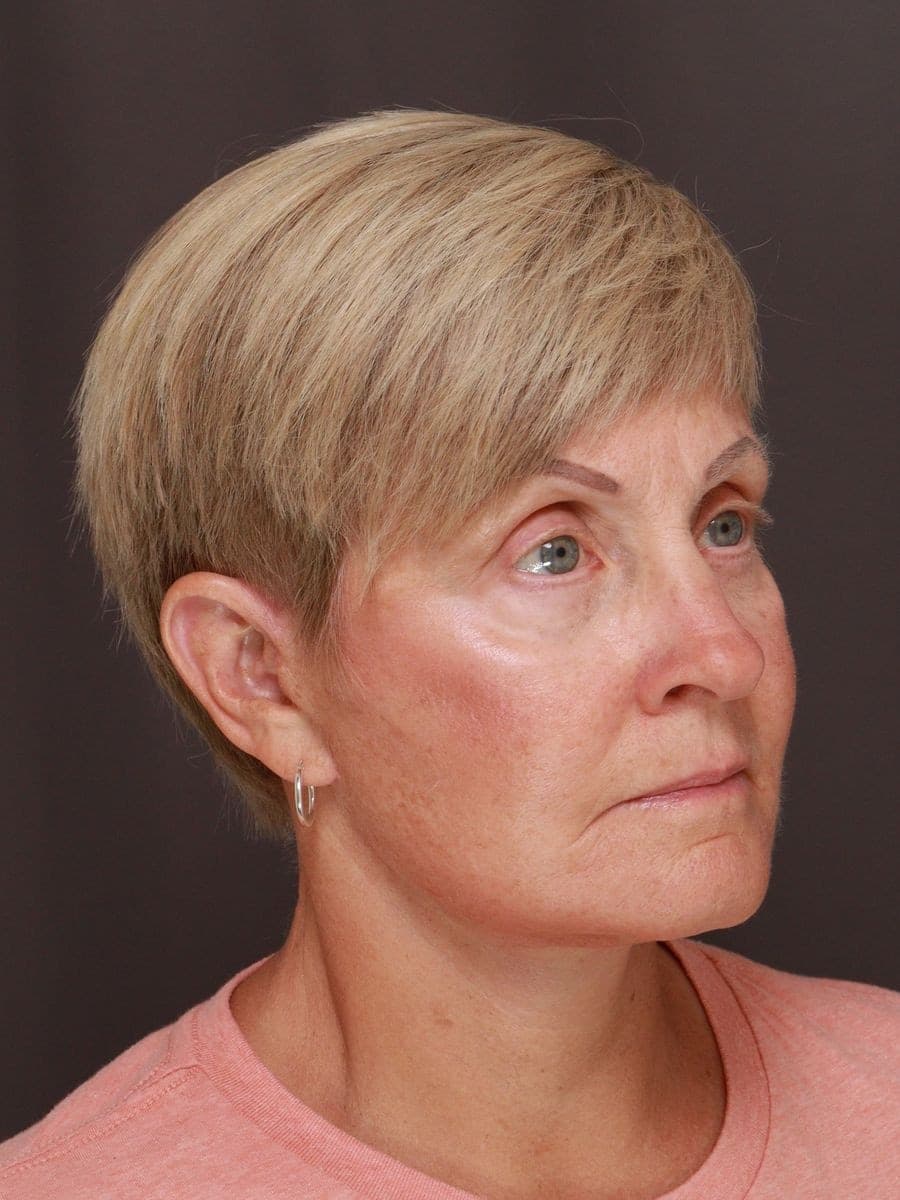
Deep plane facelift and necklift with lower blepharoplasty - 6 months post op
01 / 10
Day 0
Surgery day
Performed under local anesthesia; patients go home the same day.
Days 1–3
Peak bruising
Bruising and swelling around the lower lids are most noticeable in the first few days.
Days 7–10
Back in public
No skin sutures to remove. Most patients are presentable within seven to ten days.
Weeks–months
Contour settles
Some swelling can linger and the final contour continues to settle over several weeks to a few months.
Ongoing
Result holds
The fat that is removed or repositioned does not come back, so the correction is durable.
Lower blepharoplasty is often combined with upper blepharoplasty when both lids contribute to a tired appearance, and with a brow lift when a heavy brow is part of the picture.
When the under-eye and midface have lost volume more broadly, fat grafting can restore it, and for patients addressing the lower face and neck at the same time, it pairs with a deep plane facelift.
Dr. James Manning is double board-certified by the American Board of Facial Plastic and Reconstructive Surgery and the American Board of Otolaryngology–Head and Neck Surgery. He specializes exclusively in the face.
Lower blepharoplasty is a procedure where restraint determines the result — where preserving the lid’s own fat and the deeper tissue layers that support it separates a rested look from a hollow, operated one. Dr. Manning favors the transconjunctival, scarless approach and fat repositioning whenever the anatomy allows.
Medically reviewed by Dr. James Manning, MD · July 2026
Lower blepharoplasty is a surgical procedure that addresses under-eye bags, tear-trough hollowing, and excess lower-lid skin. It is most often performed transconjunctivally — through an incision on the inside of the eyelid that leaves no external scar — and the orbital fat is repositioned or preserved rather than simply removed. It is performed under local anesthesia.
The transconjunctival approach places the incision on the inside of the lower lid, so there is no visible external scar. When skin excess requires it, a fine incision below the lash line may be added; that scar typically fades over time.
It depends on the anatomy. Where possible, the fat that creates the bag is released and repositioned into the tear trough rather than removed, which helps avoid a hollow, over-resected look. A comparative study of transconjunctival fat repositioning reported the tear-trough deformity corrected or improved in the large majority of cases. (Duan R et al. Aesthetic Plast Surg. 2019;43(5):1230-1237. PMID 30734070)
The transconjunctival approach leaves the lid's support structures intact and is associated with a lower rate of lid malposition; the transcutaneous approach allows skin removal but carries a higher rate of the lid pulling downward. A 2025 systematic review found a low overall complication rate for lower blepharoplasty and no vision-threatening events. The right choice depends on how much skin excess you have. (Gimenez AR et al. Plast Reconstr Surg Glob Open. 2025;13(9):e7194. PMID 40995580)
Filler can soften a modest tear trough by blunting the shadow, and for some patients that is a reasonable first step. It is temporary, it does nothing for the underlying fat that creates the bag, and overfilling a thin lower lid can cause puffiness of its own. Surgery addresses the cause when the bag itself is the problem.
The procedure is performed under local anesthesia and patients go home the same day. Bruising and swelling are most noticeable in the first few days; most patients are presentable within seven to ten days, with the final contour settling over several weeks to a few months.
The fat that is removed or repositioned does not come back, so the correction of the bag is durable and generally considered long-lasting. What continues is aging — the skin and the supporting tissues keep changing over the years, the way they would have anyway. Most patients do not need a second lower blepharoplasty.
Tear-trough filler, by contrast, is temporary and is maintained on a schedule when it is used instead of surgery.
A 2025 systematic review of lower blepharoplasty reported a low overall complication rate and no vision-threatening events; most complications that did occur were minor and resolved with conservative management or, less often, a revision. As with any surgery there are risks — including temporary dryness, swelling, and, less commonly, lid malposition — which are reviewed in detail at consultation. (Gimenez AR et al. Plast Reconstr Surg Glob Open. 2025;13(9):e7194. PMID 40995580)
If under-eye bags or tear-trough hollows are bothering you, we would love to see you in consultation to determine if lower blepharoplasty would best fit your needs.
Inquire About Consultations801·317·8687