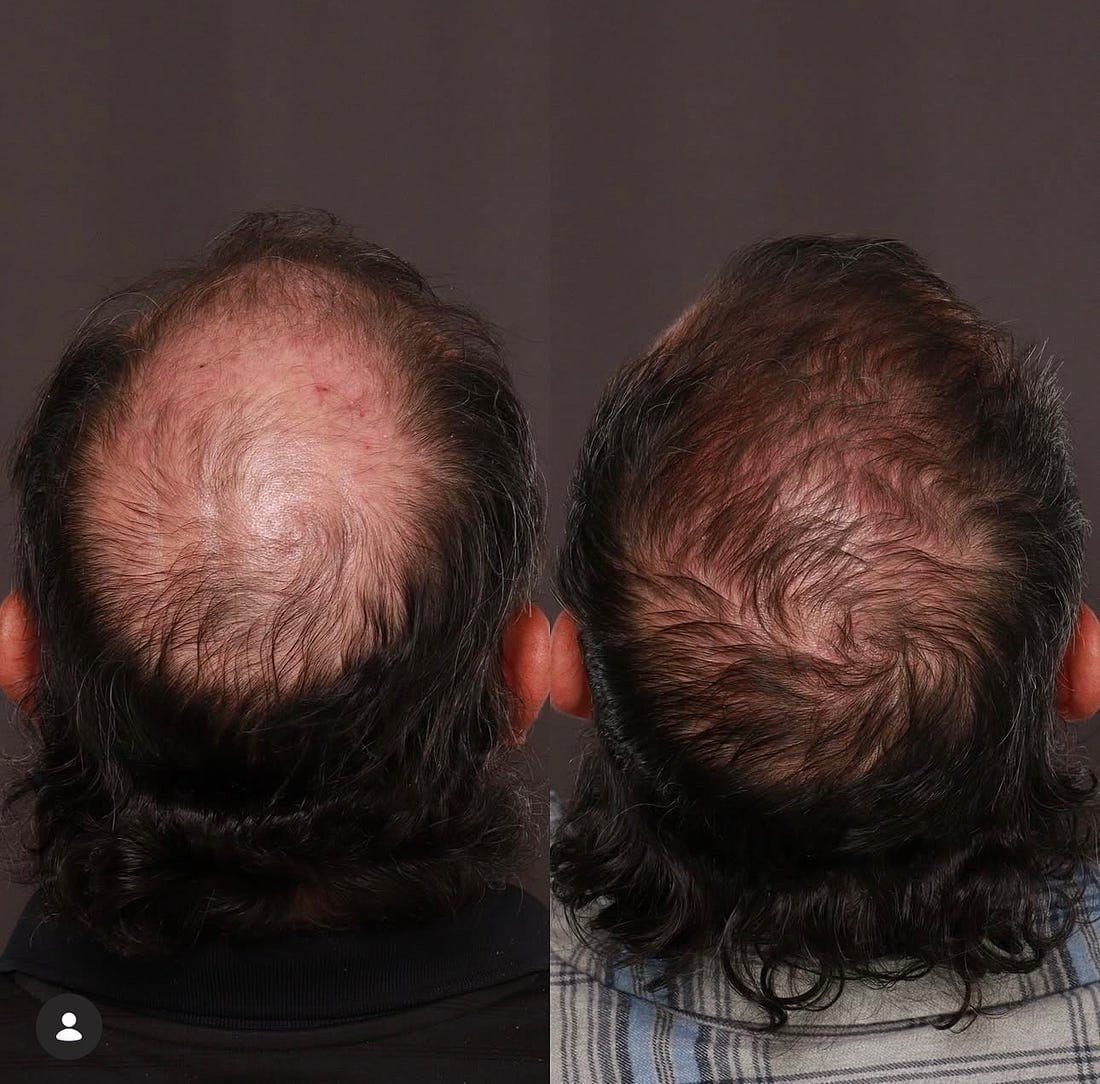
As a hair transplant surgeon, I will occasionally see men who have lost too much hair to be able to effectively perform a transplant. Had they taken medication to slow, stop, or even reverse their hair loss early on, they would potentially be a great candidate — or would not need a transplant at all.
Finasteride and dutasteride are two of the most effective medications used to treat male pattern hair loss. They work by blocking an enzyme called 5-alpha reductase, which converts testosterone into dihydrotestosterone (DHT) — the hormone that causes hair follicles to shrink over time. Lowering DHT helps slow or even reverse hair loss.
If you search online, much of the discussion about these medications focuses on possible side effects — especially sexual dysfunction and mood changes. The internet can make these risks sound common and severe. So what does the actual research show?
Sexual side effects
Sexual side effects are the most commonly discussed concern. Researchers have studied this question in multiple randomized clinical trials. Across these studies, the overall rate of sexual side effects with the pill form of finasteride is about 5.3% with the drug versus 3.0% with placebo — roughly 2 additional cases per 100 men compared with placebo.
The most commonly reported symptoms are erectile dysfunction, reduced libido, and ejaculatory changes. Each individual symptom occurs in roughly 1–2% of patients, so the combined risk of experiencing any sexual side effect is about 5–6% on the pill form of finasteride (1 mg dose). Most studies also show that these symptoms often resolve — either during treatment if the patient continues, or after stopping the medication.
Dutasteride works similarly but blocks two forms of the enzyme instead of one. Because of this, it suppresses DHT more strongly and can sometimes produce greater hair growth — and clinical trials suggest sexual side effects with the pill form of dutasteride are more common than with finasteride, around 16% in the studies sampled.
Mood and mental health
Another concern sometimes discussed online is depression or mood changes. Mood-related side effects in these studies are extremely rare, typically reported in about 1% of patients. I have seen this occur rarely. If someone has a history of depression, we discuss reducing the risk of impacting mood by moving from a pill form to a topical form.
What about topical finasteride?
A newer option is topical finasteride, applied directly to the scalp. The goal is to reduce DHT in the hair follicles while minimizing how much of the drug enters the bloodstream. Clinical studies show topical finasteride results in lower systemic blood levels of the drug and less systemic DHT suppression throughout the body. In these studies, the rate of sexual side effects and mood disorders was similar to placebo.
Putting the risk in perspective
One of the most important ways to understand medication safety is by looking at absolute risk. For finasteride, about 5 men out of 100 report sexual side effects, and about 3 men out of 100 report similar symptoms even with placebo — so the drug increases risk by roughly 2 additional cases per 100 patients. Mood-related side effects appear to be very rare but must still be considered.
The most important thing is understanding the actual data, rather than relying only on anecdotes or internet discussions.
Persistent side effects after stopping the pills (sometimes called post-finasteride syndrome) are extremely uncommon — so uncommon that there are not enough data to say whether it actually occurs or is simply coincidental. My patients who experience side effects on the pill form typically transition to the topical formulation and rarely, if ever, have symptoms after switching. Like any medical treatment, the decision to use these medications should involve a discussion between a patient and a physician.
Sources
- Kaufman KD, Olsen EA, Whiting D, et al. Finasteride in the treatment of men with androgenetic alopecia. J Am Acad Dermatol. 1998.
- Kaufman KD, Rotonda J, Shah AK, Meehan AG. Long-term treatment with finasteride 1 mg decreases the likelihood of further visible hair loss. Eur J Dermatol. 2008.
- Mella JM, Perret MC, Manzotti M, Catalano HN, Guyatt G. Efficacy and safety of finasteride therapy for androgenetic alopecia: a systematic review. Arch Dermatol. 2010.
- Harcha WG, Barboza Martínez J, Tsai TF, et al. A randomized trial evaluating dutasteride in men with androgenetic alopecia. J Am Acad Dermatol. 2014.
- Caserini M, Radicioni M, Leuratti C, et al. Topical finasteride spray solution for androgenetic alopecia. J Am Acad Dermatol. 2020.